Cleaning Old Coins: When to Stop and Leave Them Alone
My early coin-cleaning technique was a thumb, a paper towel and unreasonable confidence. I’ve since learned that a little dirt is often easier to live with than a permanently scratched coin.
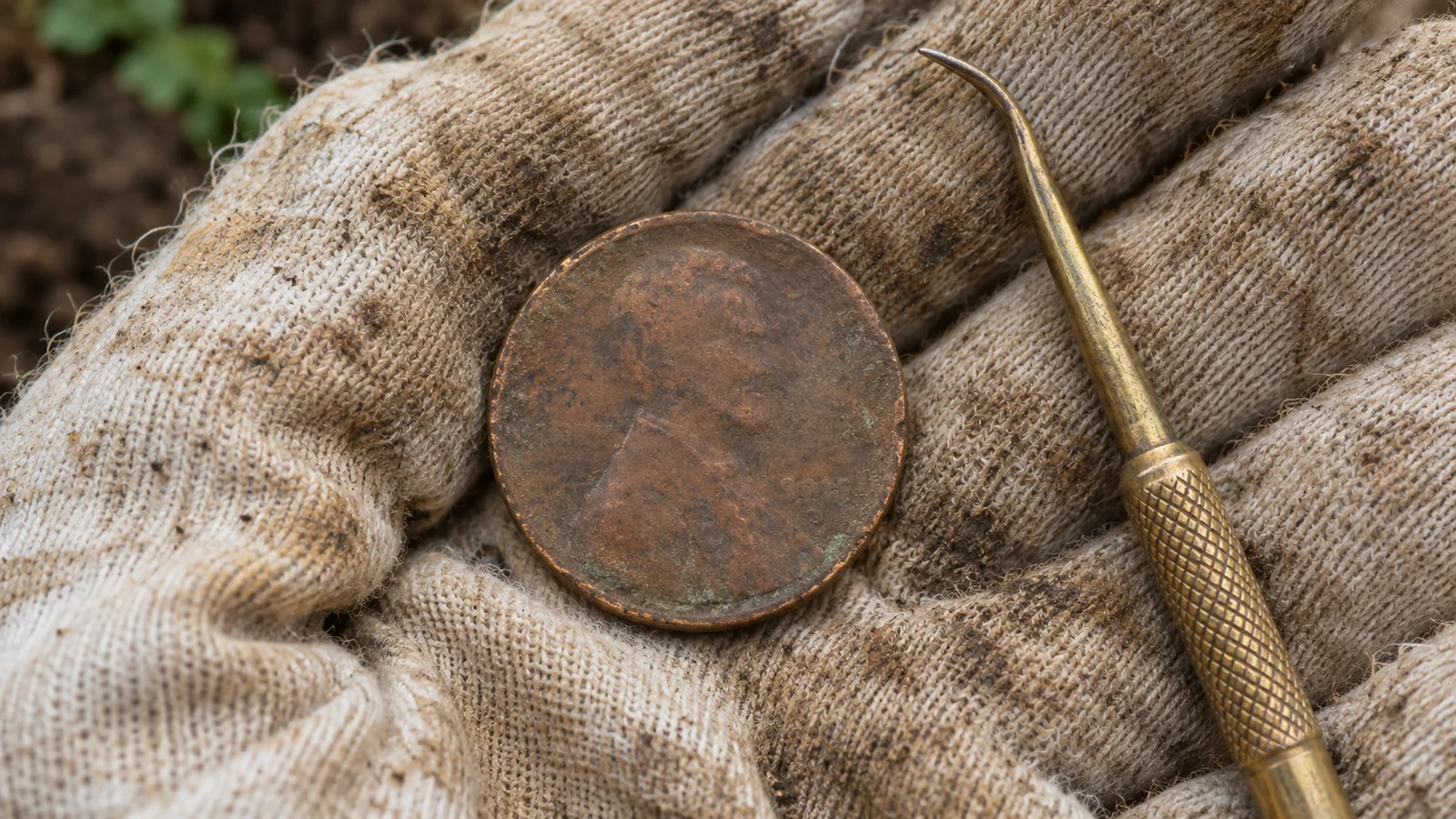
My first attempt at cleaning a found coin involved a paper towel and a thumb. It left the coin shinier in a few spots and much harder to identify. I had mistaken “looks dirty” for “needs cleaning,” which is an easy mistake when a coin comes out of the ground coated in mud. Now I stop and ask what the coin is, what the surface might be, and whether removing anything will do more harm than good.
When people ask how to clean old coins, the most useful answer is often: don’t, at least not yet. Cleaning can remove original surface, scratch a coin, loosen corrosion or erase details that help with identification. For a potentially valuable, archaeological or fragile coin, get advice from a coin specialist or conservator before trying a treatment.
Should you clean a found coin?
Usually, leave it alone until you have photographed and identified it. Soil can hide the design, but it can also protect a surface from careless handling. A coin’s patina and remaining detail are part of its condition; a bright finish created by polishing is not the same as a well-preserved coin. Collectors often prefer an untouched surface to a cleaned one, even when the coin still looks dull.
If the coin may be historically significant, part of a group, or from a protected site, don’t clean or separate it. Record the location and circumstances, keep it safe, and contact the appropriate local finds service or heritage authority. Reporting and ownership rules vary by jurisdiction. The context around an object may matter, so don’t destroy it while trying to make the date readable.
Begin with the least intervention
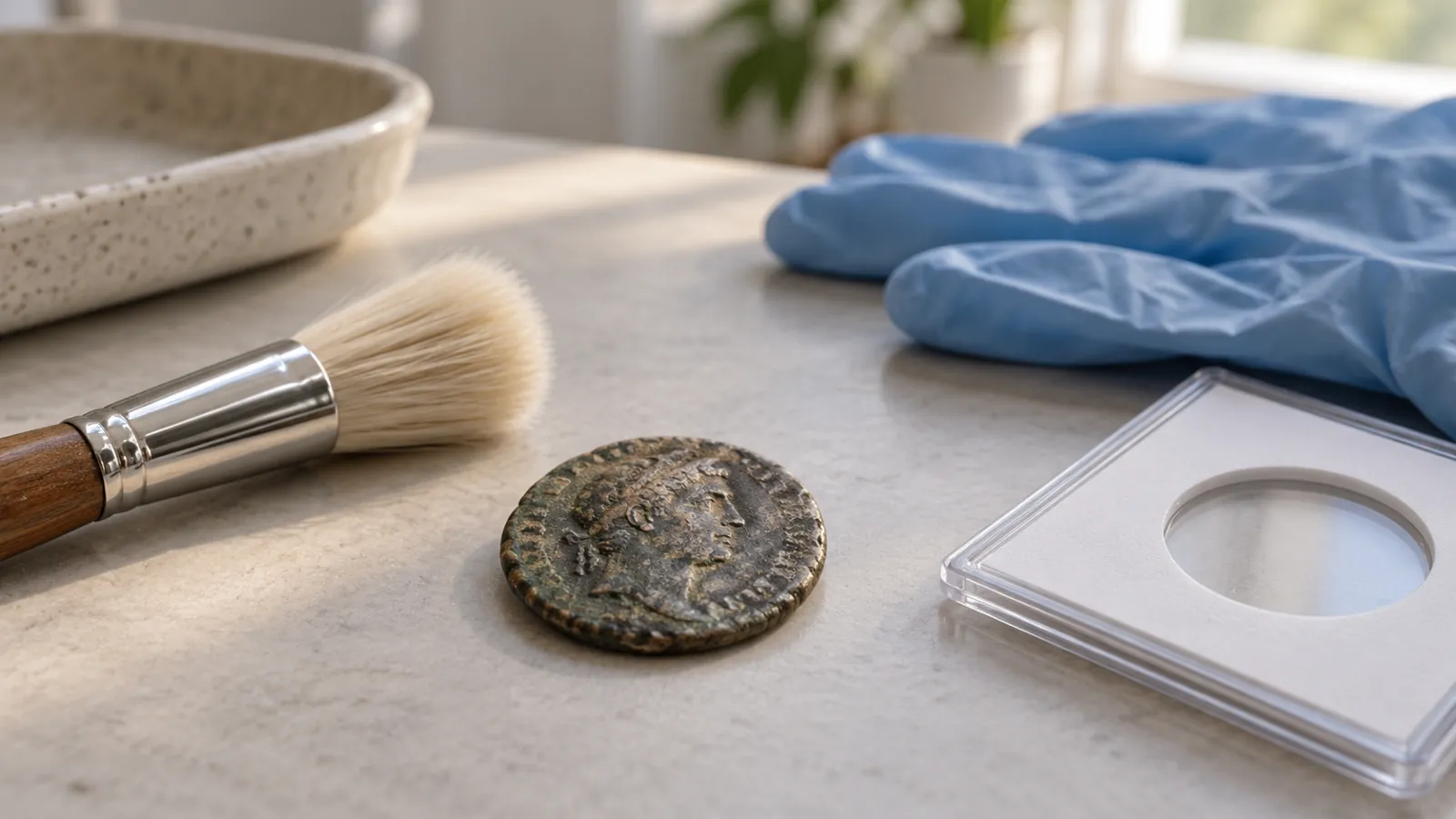
Take clear photos of both sides before doing anything. Use diffuse light and avoid flash glare. If loose, dry soil is obscuring the view, a very soft brush can move it gently without dragging grit across the metal. Stop if the surface flakes, feels soft, has a crust, or shows delicate details. Grit behaves like sandpaper, and the coin does not get a vote.
Do not use a knife, pin, metal brush, abrasive pad, polishing cloth or household cleaner. Avoid rubbing the coin with a towel or your fingers. Even a material that feels soft can leave fine scratches, especially if dirt particles are trapped against the surface. Never use a rotary tool or ultrasonic cleaner on a coin you have not had assessed.
Cleaning old coins safely depends on what they are
Coins are made from different metals and alloys, and their surfaces age in different ways. Copper and bronze can develop corrosion and a stable-looking patina; silver can tarnish; iron can rust; plated coins can lose their thin outer layer. A method that is harmless to one modern coin may damage an older or corroded one. Without knowing the metal and condition, a soak is guesswork.
For a common, modern coin with ordinary dirt and no collector or historical significance, rinsing with clean water may remove loose surface grime. Don’t scrub. Pat the coin dry with a soft, lint-free material, lifting rather than wiping, and stop if any coating or detail seems to come away. If you are uncertain about the coin’s metal or value, don’t use this as a universal method; ask a specialist first.
Avoid vinegar, lemon juice, baking soda, salt, bleach, ammonia, ketchup, metal polish and commercial jewellery dips. These can react with the metal, leave residues or strip the surface. A trick that makes a coin look bright in a short video may not preserve its original details. “It worked on one coin” is not much of a conservation plan.
How to clean coins without damaging them
There is no single safe recipe for every old coin. The safest general approach is to document the coin, handle it by the edges, remove only loose surface dirt when appropriate, and stop early. If soil is tightly attached, do not pick it away. A conservator can decide whether the material is removable and which technique is suitable for that coin’s metal and condition.
Some collectors use distilled water for certain stable coins, but soaking is not automatically harmless. Water may become trapped in cracks, disturb fragile corrosion, or affect a coin made from a reactive metal. Don’t leave an unidentified coin in a bath overnight because someone online said it was gentle. If a specialist recommends a treatment, follow their instructions for that specific object.
Never assume that a coin’s surface is just dirt. Green or powdery deposits, flaking, bubbling, pitting and crusts can indicate active corrosion or instability. Keep the coin separate from other pieces and ask for professional advice. Avoid sealed plastic bags if moisture is present; they can trap it against the metal. A stable, dry place and careful handling are sensible while you arrange an assessment.
What to do after any gentle rinse
If a specialist or the coin’s modest condition makes a simple water rinse appropriate, use clean water and a container that will not scratch the coin. Don’t let the tap’s force hit a fragile piece. Do not rub it while wet. Lift it out carefully and let it dry fully in a safe place, or blot by gently touching a soft lint-free cloth to the edge. If anything changes unexpectedly, stop and document what happened.
Do not apply oil, wax, lacquer or clear coating to “protect” the coin without expert advice. Coatings can trap contaminants and complicate future study or conservation. Store the dry coin in a holder made from materials intended for numismatic storage, and avoid holders that contain PVC or unknown plastics. Keep different coins from rubbing against each other.
Make identification easier without scrubbing
When a date is hard to read, try lighting rather than cleaning. Shine a lamp from the side to reveal raised details, then take photos at a few angles. A magnifier can help, but don’t press it against the coin. Compare the portrait, lettering, border and symbols with a reliable reference. Record uncertain letters as uncertain instead of forcing a guess.
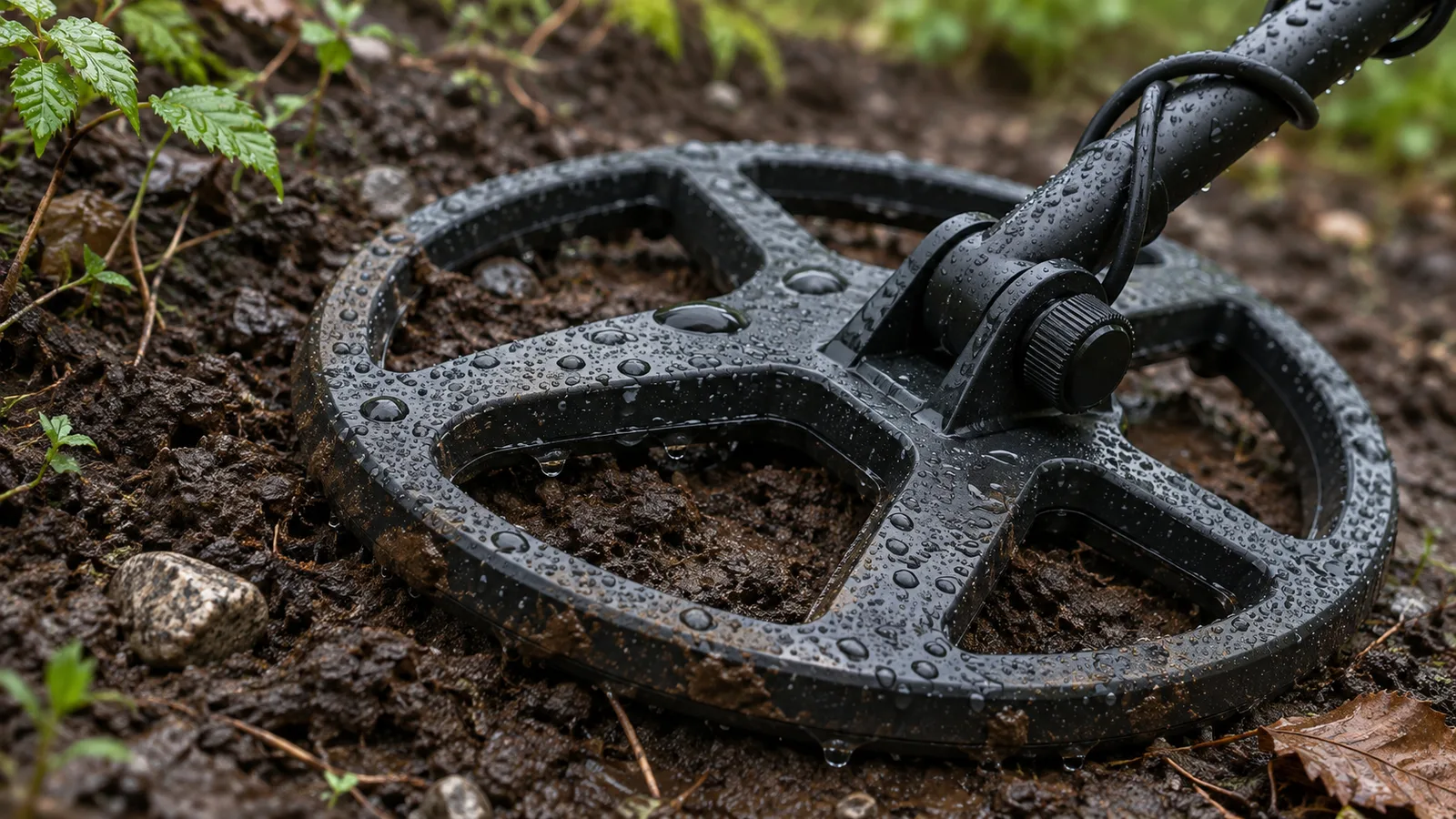
For coins found while detecting, make a note of the location, depth if known, and nearby objects before the details fade from memory. Follow the reporting rules where you searched. I keep a small notebook because a photograph of a muddy coin labelled “field, Saturday” is surprisingly unhelpful six months later. In a virtual setting, MetalHunter offers another way to inspect and collect finds, but real objects deserve a slower hand than a game inventory.
When professional help is the right move
Ask a conservator or qualified coin specialist before cleaning a coin that may be rare, valuable, archaeological, unstable or made of an unfamiliar metal. Also seek help if it has active corrosion, a delicate surface, a coating, or details that are starting to lift. A dealer can help with identification and value, while a conservator focuses on the object’s preservation; their roles are related but not identical.
Share photographs and measurements first, and explain whether the coin was dug up, stored in damp conditions, or exposed to a previous cleaning attempt. Don’t feel embarrassed about a mistake. Most collectors have a story about the first time they used the wrong tool. Mine just happens to be a paper towel.
FAQ
Should you clean a found coin?
Usually, photograph and identify it first. Leave potentially valuable, archaeological, fragile or corroded coins untouched and ask a specialist. Cleaning can permanently reduce detail and collector interest.
What is the safest way to clean old coins?
There is no one-size-fits-all method. For an appropriate, common modern coin, gentle removal of loose dirt may be enough. Avoid rubbing, scraping and chemicals, and ask a specialist if the coin’s metal or condition is uncertain.
Can I use vinegar or baking soda on coins?
It is best to avoid household acids, powders and abrasives. They can react with the metal, scratch the surface or remove patina. A coin that looks brighter afterward may also have been damaged.
How should I store a coin after cleaning?
Make sure it is fully dry, handle it by the edges, and use a holder designed for coin storage from inert materials. Keep it in a stable, dry place and avoid PVC-containing plastic sleeves.