How to Dig a Plug Metal Detecting: Clean Target Recovery
A neat plug protects the turf, preserves access to public grounds, and keeps coins safe from shovel dings. Here is the exact technique I use on manicured grass.
Learning how to dig a plug metal detecting is the single most valuable skill you will ever master in this hobby. You can own a top-of-the-line multi-frequency detector, understand ground phase balance inside and out, and read soil mineralization like a geologist, but if you leave unsightly brown scars across a town common or a private lawn, you hurt the entire detecting community. Public land closures almost always trace back to sloppy diggers who left open holes and killed turf.
When you cut a proper plug, the grass survives, the target comes out clean without scratches, and the ground looks untouched when you pack up your gear. With a few deliberate habits and the right hand tools, you can cleanly open and close a recovery hole in under two minutes without leaving a trace.
The Science Behind the Hinged Horseshoe Plug
Many eager beginners pull out their digging tool and cut a complete circle around the signal, lifting out a round cylinder of sod like a golfer pulling a cup on a green. Cutting a complete circle cuts all root connections. Within three days of hot sun, that isolated round disk dries out completely, the grass dies, and a glaring yellow-brown ring appears on the lawn.
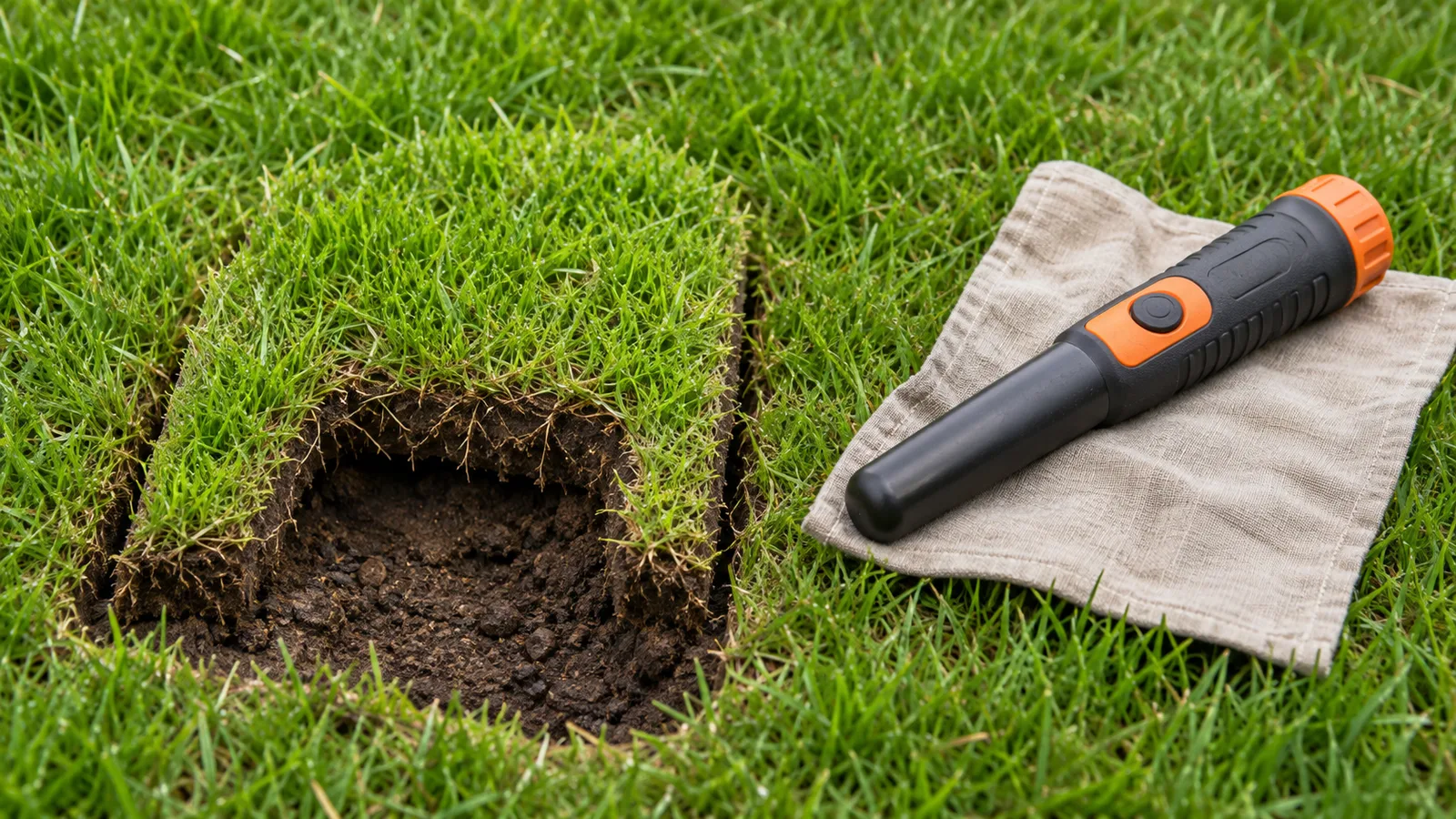
The golden rule of clean lawn recovery is the three-sided hinged cut, often called the horseshoe plug. Instead of cutting a 360-degree circle, you slice three clean sides with your serrated blade and leave the fourth side completely intact. This intact side serves as a living root hinge. Because the root system on the hinge side remains connected to the surrounding lawn, capillary moisture continues to feed the grass blades above. When you fold the plug back down and firmly step on it, the sod continues to thrive as if nothing happened.
Step-by-Step Clean Recovery Technique
A flawless plug begins before your blade ever touches the sod. Rushing into the dirt blindly is how coins get gouged and lawns get ruined. Follow this step-by-step process for every lawn signal:
- Pinpoint with precision: Center your target using your detector coil's pinpoint button or the crosshair sweep method. Sweep north-to-south, then turn ninety degrees and sweep east-to-west. The loudest, highest pitch identifies the exact center of the buried object.
- Size your plug generously: Cut your horseshoe slit at least three to four inches away from where you pinpointed the target center. Cutting a plug that is too small risks driving your steel blade directly into the face of a rare coin or vintage token.
- Angle your blade outward: Push your serrated blade into the turf at roughly a seventy-degree angle, pointing outward away from the center. This creates a beveled, bowl-shaped plug that sits snugly back into place when you close the hole, preventing the plug from collapsing into empty space later.
- Fold the plug backward: Pry gently with the flat face of your digger and flip the sod backward along its uncut root hinge, exposing the loose subsoil beneath.
- Use a ground cloth: Always lay down a small towel, bandana, or frisbee right next to the hole. Any loose dirt you scoop out of the hole goes directly onto the cloth, keeping the surrounding green grass completely free of mud.
How to Recover Targets Without Damage
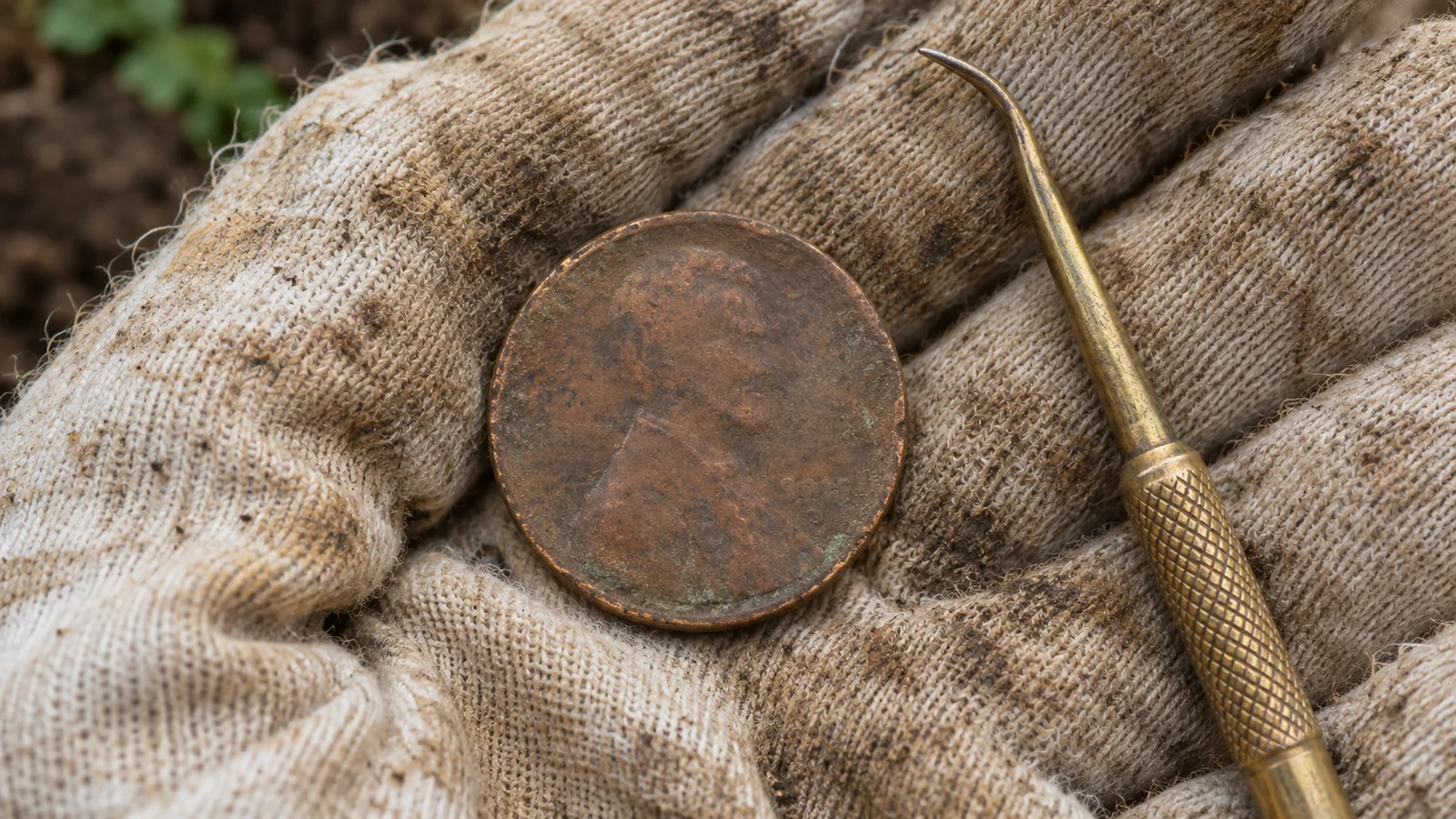
There is no worse feeling in metal detecting than pulling a rare 1800s silver coin from the dirt only to find a fresh, shiny gash sliced across the date by your shovel. Learning how to recover targets without damage takes patience and a gentle touch.
Once you flip the sod plug back, resist the urge to jab your steel trowel down into the open hole. Instead, pull out your handheld pinpointer. Turn it on and scan both the underside of the flipped sod plug and the bottom of the open pit. More than half the time, shallow coins sit right in the root mass of the plug itself. If your pinpointer buzzes in the plug, gently crumble the dirt between your gloved fingers until the coin drops into your palm.
If the signal is still in the bottom of the hole, use your hand digger to scrape thin layers of dirt from the center, placing the loose soil onto your ground cloth. After scraping an inch, check again with the pinpointer. When the pinpointer indicates the object is directly in front of you, switch to a plastic probe, a wooden dowel, or simply your gloved fingers to work the object free. Metal-on-metal contact should never happen under the dirt.
Proper Methods for Filling Holes
Opening the ground is only half the job; filling holes properly is what preserves our permission to hunt. A hole that is poorly backfilled will settle after the first heavy rainstorm, leaving a dangerous, ankle-twisting depression that can damage lawnmower blades.
Pick up your ground cloth by the corners, making a funnel, and pour all loose subsoil back into the bottom of the hole. Use the butt end of your digging tool or your fist to pack the dirt down firmly. Eliminate all empty air pockets. The loose soil should fill the pit almost to the level of the surrounding root zone.
Next, fold the grass plug back over on its hinge, aligning the turf edges carefully. Once the plug is seated, step on it firmly with your boot heel. Put your full body weight into the stamp. The surface of the plug should sit perfectly flush with the adjacent lawn. If the plug sits higher than the lawn, you left too much dirt in the bottom; if it sits lower, lift it back up and add more loose soil underneath.
Choosing the Right Digging Tools
Never bring a full-sized farm spade or an oversized trenching shovel into a public park, manicured church lawn, or private front yard. Big shovels terrify property owners and park rangers, even if your intentions are pure. Reserve large spades for plowed farm fields, deep woods, and rough pastures.
For lawns and public turf, carry a dedicated double-edged hand digger made of tempered steel. Look for a model with sharp saw teeth on one side to slice cleanly through tough sod roots without tearing the grass out by the clumps. In virtual mobile simulators like MetalHunter, players can tap a button to excavate relics instantly without worrying about property damage, but out in the real world, your trowel technique is your calling card.
FAQ
Why should you never cut a full circular plug?
Cutting a complete circle severs all roots connecting the sod to the ground. In dry or warm weather, the severed sod cannot draw moisture from the surrounding earth, causing the grass to wither, turn brown, and die within days.
Should you dig plugs during extreme summer heat?
It is best to avoid digging plugs in manicured lawns during severe summer droughts or heatwaves. When grass is already brown and dormant from lack of water, even a clean hinged cut can stress the turf enough to cause lasting brown spots. Save lawn hunting for spring and autumn when moisture is plentiful.
What should you do if the soil is dry and crumbles into powder?
If the ground is so dry that the sod disintegrates into loose powder when you cut it, stop digging on manicured turf. Crumbling soil cannot form a cohesive plug, leaving an ugly bare dirt patch. Move your hunt to the woods, a plowed field, or a beach until steady rain returns.
How do you deal with curious spectators watching you dig?
Smile, be polite, and show them how cleanly you dig. Explain that you use a three-sided cut to protect the grass roots and that you carry away all trash, including pull tabs and rusted nails. Demonstrating a clean recovery on the spot often turns skeptical bystanders into supportive friends.