How Deep Can a Metal Detector Detect? Real World Depths
Manufacturers love to claim extreme depth, but real dirt tells a different story. Here is what you can actually expect to find under realistic field conditions.
Every newcomer to our hobby asks the exact same question before buying their first machine: how deep can a metal detector detect? Many hope to hear tales of uncovering treasure chests buried four or five feet deep in the backyard. Unfortunately, flashy advertisements and unboxing videos often feed these unrealistic expectations by showing air tests where a detector chirps over a silver dollar held two feet away from the coil.
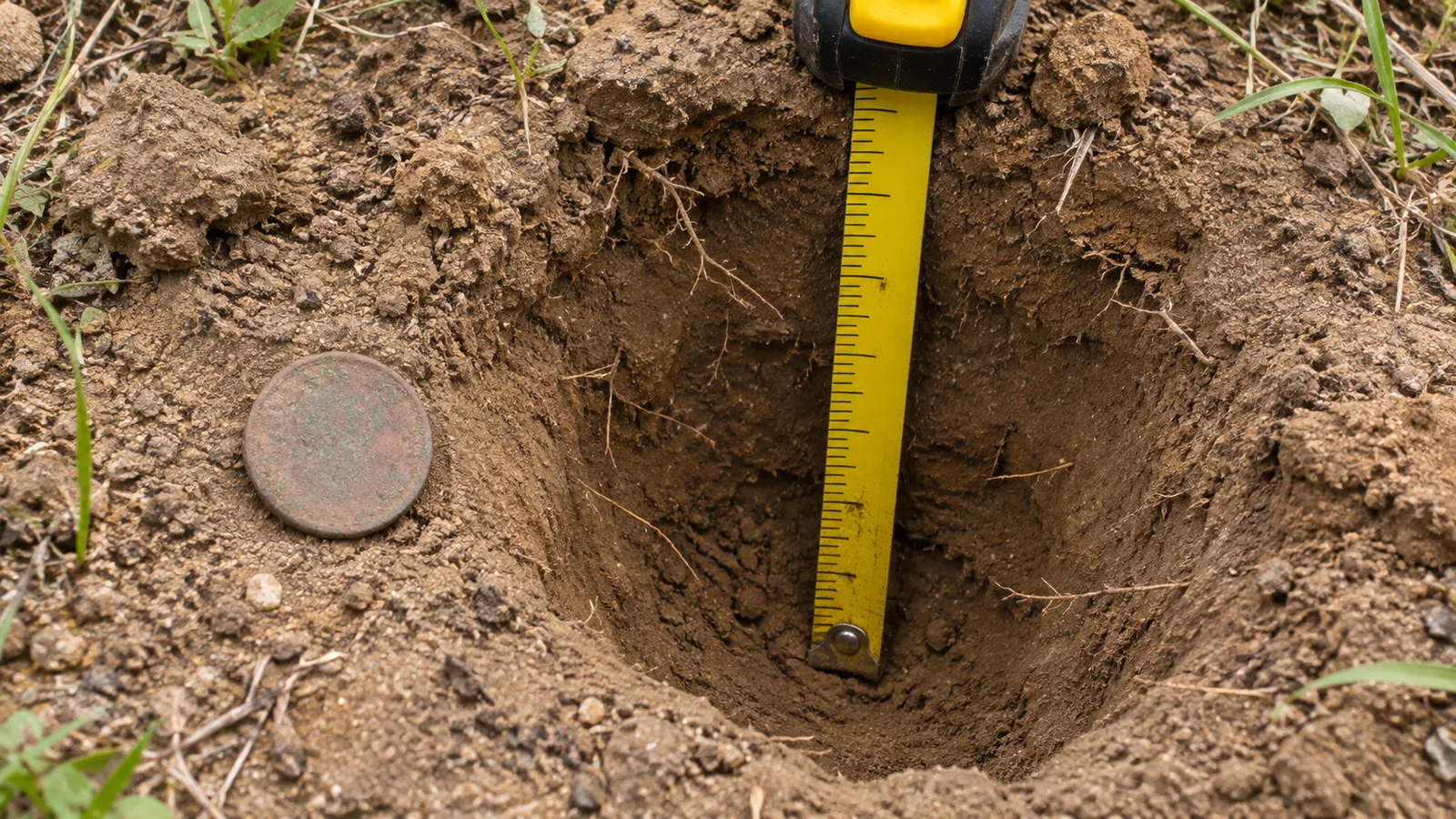
In the real world, air tests mean very little. As soon as you place that coin beneath six inches of wet, mineralized dirt packed with iron fragments, physics takes over. For standard coin-sized objects, most quality consumer detectors reach between six and eleven inches deep under realistic field conditions. Let us examine the practical limits of detection depth, how electromagnetic fields interact with soil, and why chasing maximum depth is not always the best path to finding relics.
The Physics of Search Coils and Signal Drop-Off
To understand depth limits, you have to look at how a metal detector communicates with buried metal. A conventional Very Low Frequency (VLF) detector powers a transmit coil that pulses an alternating electromagnetic field downward into the earth. When this field passes through a metallic object, it induces tiny circulating electrical currents inside the metal, known as eddy currents.
These eddy currents generate their own weak secondary electromagnetic field, which radiates back up toward the surface where the detector's receive coil picks it up. The critical takeaway is that electromagnetic energy diminishes exponentially with distance. For small targets like coins and rings, signal strength drops off roughly according to the inverse sixth power of the distance between the search coil and the target.
Because of this rapid signal decay, doubling your detection depth requires an enormous increase in transmitted power. Pumping excessive energy into the ground eventually causes the detector to blind itself against the mineral grains in the soil, similar to turning on high-beam car headlights in a thick fog.
What Affects Depth in Real Soil Conditions
When you take your detector into the field, detection depth fluctuates dramatically from one property to another. Understanding what affects depth helps you adjust your machine settings instead of wondering why your detector suddenly went quiet. The most significant factors include:
- Target size and physical orientation: Large objects reflect more electromagnetic energy than small ones. A brass cannonball or a cast iron skillet can easily be detected at three to four feet. Conversely, a coin lying perfectly flat will read two to three inches deeper than the exact same coin resting vertically on its edge, because an edge-on coin presents a tiny surface profile to the incoming electromagnetic waves.
- Soil mineralization: This is the greatest depth killer in our hobby. Ground containing heavy concentrations of natural iron oxides (red Georgia clay, volcanic black sand, or decomposed granite) creates massive ground noise that drowns out faint signals from deep coins.
- Ground moisture: Damp soil generally improves conductivity, allowing the coil's field to penetrate deeper and sharpening target audio. In addition, old coins buried in moist soil for centuries often develop an oxidized halo of mineral salts around them, making the target appear electromagnetically larger than the coin itself.
- Search coil dimensions: As a general rule of thumb, a search coil's maximum penetration depth on a coin-sized target is roughly equal to its diameter. An eight-inch coil reaches around eight inches, while an eleven-inch coil reaches ten to eleven inches under favorable conditions.
Realistic Depth Expectations in the Field
To give you a clear, grounded picture of what your machine can realistically achieve, here is a breakdown of typical depth ranges based on target category and ground conditions:
| Target Category | Typical Depth Range | Ground Conditions |
|---|---|---|
| Small coin (dime, small bronze cent) | 5 to 8 inches | Moderate loam pasture |
| Large coin (silver half dollar, large cent) | 8 to 11 inches | Mild, damp sandy loam |
| Belt buckle, brass badge, or pocketknife | 10 to 14 inches | Low mineralization soil |
| Horseshoe or small iron pot | 14 to 20 inches | Agricultural plowed field |
| Automobile engine block or steel drum | 3 to 5 feet | Any non-volcanic ground |
Why Raw Depth Is Not Everything
Many beginners fall into the trap of cranking sensitivity up to maximum and strapping on the largest fifteen-inch coil they can buy, believing that depth is the only metric that matters. In reality, sheer depth is often your enemy, especially in trashy locations like historic parks, picnic grounds, or colonial ruins.
When you swing a huge coil with high sensitivity over ground packed with iron nails and pull tabs, the detector's wide electromagnetic cone sees three or four pieces of junk at the same time. This problem, known as target masking, causes the machine to either scream with iron grunts or go silent from audio discrimination overload. A smaller nine-inch coil with lightning-fast recovery speed will pull dozens of silver coins from six inches deep right between rusted nails, while a giant deep-seeking coil misses them completely.
In virtual adventure games like MetalHunter, leveling up your equipment gives you clear, predictable depth boosts across every landscape, but real-world treasure hunting requires balancing raw power against site conditions, ground phase calibration, and sweep speed.
FAQ
Can standard hobby metal detectors find treasure chests buried five feet deep?
A standard VLF detector with a regular search coil cannot see small coin-sized objects at five feet, but it can detect large metallic masses like an iron chest, a steel drum, or a buried pipe at that depth. Specialized two-box detectors or pulse induction deep-seekers are built specifically for large, deep caches.
Does sweeping faster increase detection depth?
No, sweeping too fast usually decreases depth. While modern digital processors are fast, sweeping wildly over deep, borderline targets prevents the machine from gathering enough signal data to give a clean audio report or accurate target ID number. A smooth, overlapping sweep is essential.
Why does my detector read an iron bolt as a deep silver coin?
Large or oddly shaped iron objects (like horseshoe tips or rusted carriage bolts) produce strong eddy currents around their edges. In deep ground, this iron distortion can trick the detector's discrimination circuit into reporting a high-pitch conductivity tone, commonly known as iron falsing.
Does raising sensitivity always give you more depth?
Not always. If you are hunting in mineralized soil, setting sensitivity too high amplifies ground chatter and false signals. Lowering sensitivity slightly often quietens ground noise, allowing subtle, deep coin signals to stand out clearly against the quiet background.