How to Identify an Old Coin You’ve Just Found
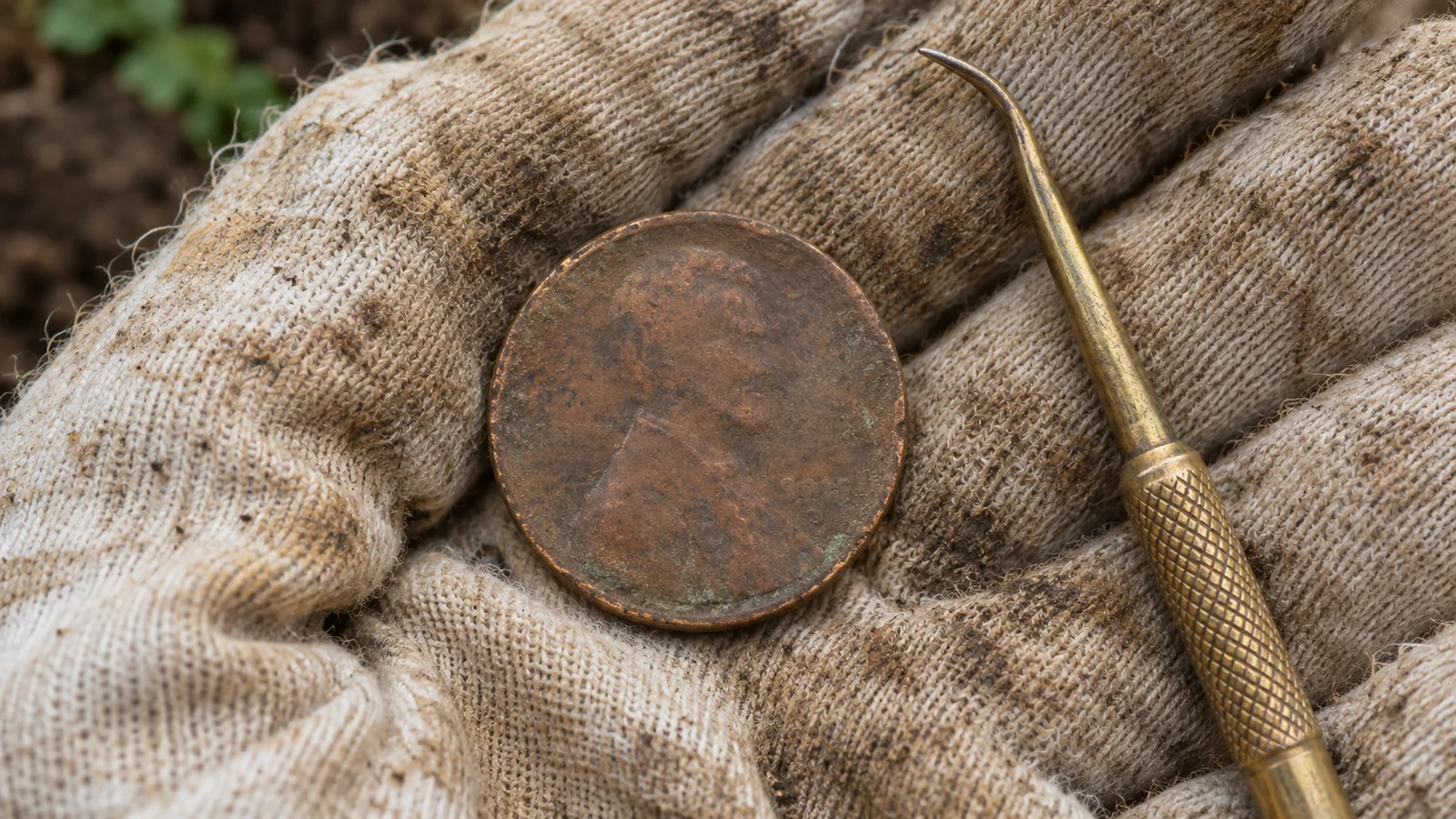
A muddy coin rarely announces its country and year on the way out of the ground. I start with the details that survive, then compare carefully before deciding what it is.
The first old coin I found with a detector was so dirty that I could only tell it was round and metal. I tried to rub the dirt off with my thumb, which did not help the coin and did not improve my identification skills. These days I begin with a photo and a few notes, then let the details tell me what to compare. A coin does not need to be rare to be interesting, but it does need to survive my enthusiasm.
If you’re working out how to identify old coins, take it in stages. Start with visible features, narrow down the country and period, and compare the coin with reliable references. Avoid guessing from one letter or a vague resemblance. Worn coins can make two very different designs look like the same small blob.
Record what you can see before cleaning
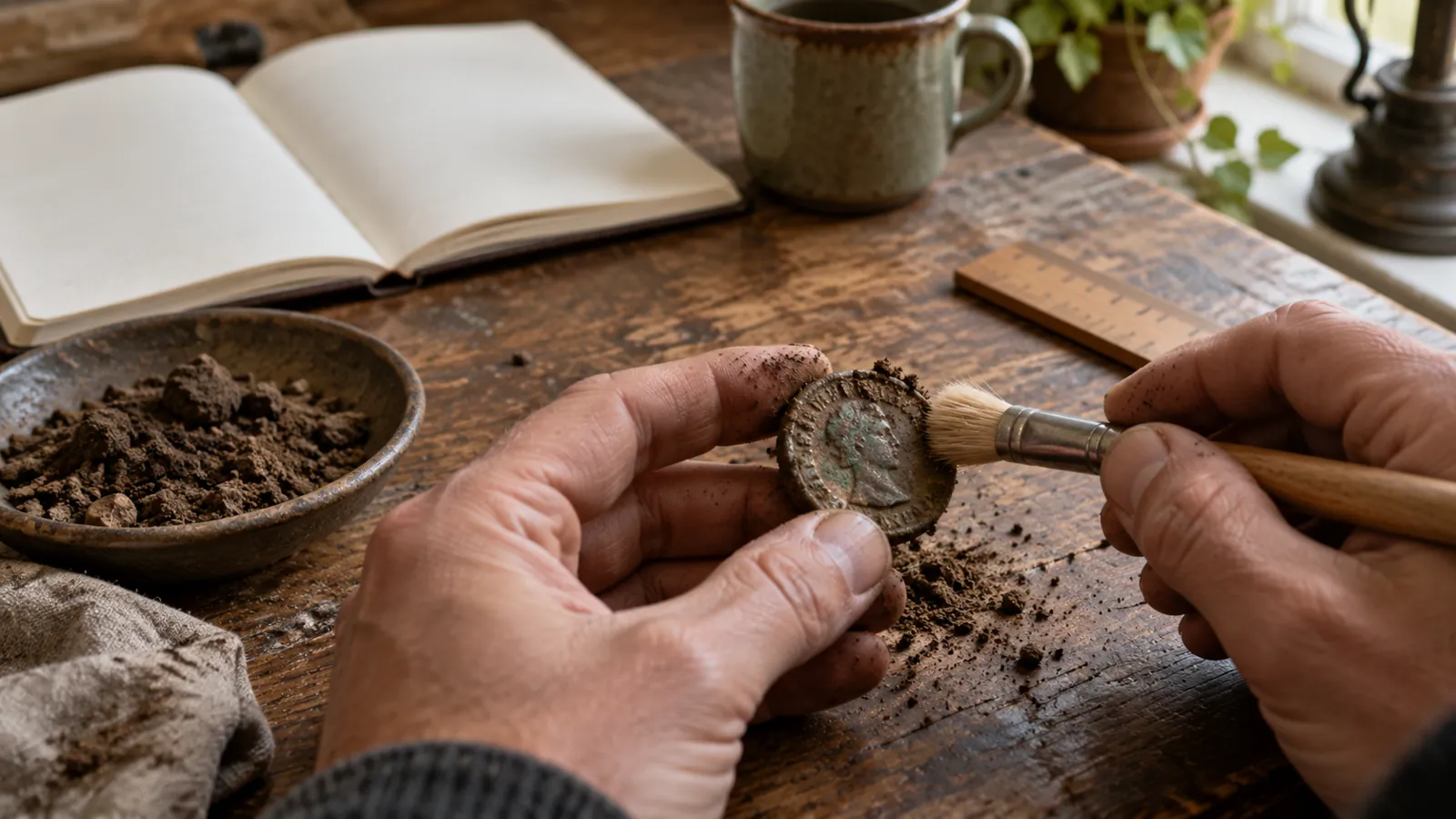
Photograph both sides in good, even light. If the surface is dirty, use a soft dry brush only to move loose soil; don’t scrape or polish the coin. Take an image straight down rather than at an angle, and include a scale beside it without letting the ruler touch a fragile surface. Keep the original photos. A later crop or brightness adjustment can help you inspect a detail, but you want an untouched version too.
Write down the coin’s weight, diameter and thickness if you can measure them safely. Use a scale that reads small weights and calipers with gentle pressure. These measurements can help separate similar-looking coins, but old pieces may be bent, worn or corroded, so a small mismatch is not proof by itself. Note the metal’s appearance, too, while remembering that tarnish can disguise the original colour.
Read the design in a useful order
Look for a portrait, animal, shield, crown, building, wreath or other distinctive symbol. Then look for lettering around the edge, a date, denomination, initials or a mint mark. Rotate the coin and check both sides. Some designs are meant to appear upright in different orientations, and a weak strike or wear may leave only part of the inscription.
Letters can be especially useful when a date is gone. Make a careful note of what you can actually read, marking uncertain characters with a question mark. A partly visible word, monarch’s name, language or abbreviation may point to a country or issuing authority. Don’t complete a damaged inscription from memory just because one possibility feels familiar.
Next, compare the whole design. Does the portrait face the same direction? Is the shield divided in the same way? Are the border, lettering and symbols in similar places? One matching emblem is a clue, not a verdict. I once convinced myself a worn coin was from a particular country because the back had a shape that looked like a bird. It was not a bird.
Use a reference, not a search-result hunch
To identify old coins by picture, search for the strongest visible clues together: a readable word, design feature, likely region and approximate size. Compare your coin with museum catalogues, national mint references, established numismatic publications or specialist coin databases. A coin-identification forum can be helpful if you share clear photos and measurements, but treat a confident answer as a lead until you can verify it.
Image search can surface lookalikes, replicas and incorrectly labelled listings. A seller’s description is not an authority, and asking an image tool to guess cannot replace checking a reference. Look for several matching details and note differences. If the year, denomination and portrait match but the lettering style or edge does not, you may have a different issue or a reproduction.
How to identify a coin with no date
A missing date does not make identification impossible. Start with the portrait or central design, then check the lettering, denomination, symbols and shape of the border. Compare size and weight where a trustworthy catalogue gives those details. If the date is worn away but part of an inscription remains, search that phrase in quotation marks or use a specialist catalogue’s index.
Consider where the coin was found, but use location as supporting evidence rather than proof. A coin can travel in a pocket, a ship, a collection or a handful of fill. A coin from another country in a local field is not automatically mysterious. The findspot may help narrow options, but the coin itself needs to match a documented type.
Some dates were struck in more than one place, and the mark identifying the mint may be tiny. Look around the date, below a portrait, or near the main design depending on the coin series. If the mark is worn away, record that uncertainty. It is better to identify a coin as “likely this type, mint unclear” than to invent a precise answer.
Separate identification from valuation
Finding a coin’s country, type and date is a different task from deciding what it is worth. Condition, authenticity, mint mark, variety, demand and legal ownership can all affect a valuation. A coin that looks old or unusual is not automatically valuable, and surface damage can make a major difference. For anything potentially significant, compare it with reputable catalogues and consider asking a qualified coin dealer or numismatic society for an opinion.
Be careful with online prices. Asking prices are not necessarily sale prices, and one expensive listing does not establish market value. Look for completed sales for the same type and condition, not just the same year. If you suspect the coin is a valuable or protected cultural object, get specialist advice before cleaning, selling or shipping it.
Keep your notes with the coin
Once you have a likely identification, label the storage holder rather than writing on the coin. Record the source of the identification, the date you checked it, measurements, condition and any uncertainty. If the coin came from detecting, keep the find location and circumstances in your notes, subject to local reporting requirements. That context can matter to a specialist and helps you remember why you thought it was a certain type.
I enjoy the detective work almost as much as the signal that started it. On a rainy evening, comparing a worn coin with a catalogue can turn a muddy disc into a small piece of history. For a lighter way to practise reading signals and checking finds, MetalHunter has a collection of virtual coins among its many finds. Real coins, of course, do not politely wait in a menu while you decide what to call them.
FAQ
What is the best way to identify an old coin?
Photograph both sides, record its size and weight, note visible lettering and design features, then compare it with a reliable catalogue or museum reference. Use several clues rather than one resemblance.
Can I identify old coins by picture alone?
Sometimes a clear image is enough to identify a common type, but worn surfaces, replicas and similar designs can mislead. Measurements, inscriptions and a trustworthy reference make the identification more reliable.
How do I identify a coin with no date?
Use the portrait, symbols, lettering, denomination, size and weight. A mint mark or partial inscription may still narrow it down. Record uncertainty if wear prevents a firm identification.
Should I clean a coin before asking someone to identify it?
No aggressive cleaning. Photograph it first and remove only loose dirt with a soft brush if appropriate. Abrasive cleaning can erase details that help identify the coin and may damage its surface.