Magnet Fishing for Beginners: Magnet, Rope, and First Cast
My first magnet fishing session involved a rope that was too short and a knot I trusted more than I should have. A little preparation makes the first cast safer, calmer and much less likely to end with your magnet staying in the water.
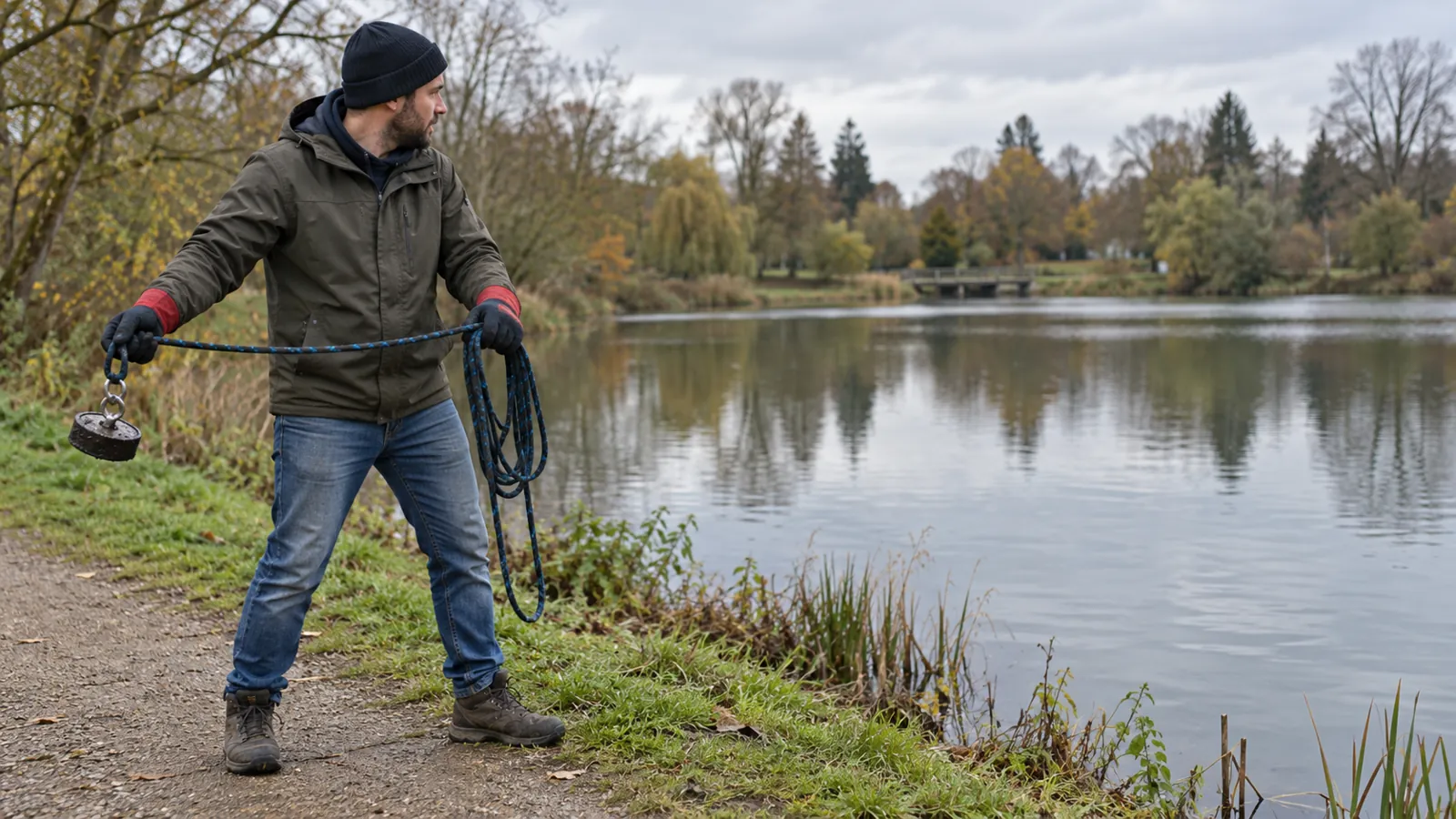
My first magnet fishing trip was less a grand expedition and more a lesson in rope length. I brought a magnet, a pair of gloves and a coil of line that looked fine at home. At the water, I discovered that a short rope limits your options rather quickly. The magnet came back, thankfully. My dignity arrived a little later.
Magnet fishing for beginners is easy to understand: tie a strong magnet to a rope, lower or cast it into water, then retrieve anything ferrous that sticks. The simple description hides a few practical details. A magnet that suits your site, a reliable connection and careful handling matter more than buying the biggest item in a shop.
Pick a magnet for the places you will visit
The best magnet for magnet fishing depends on where you plan to fish and how much experience you have. Pulling force ratings are often advertised prominently, but those figures are usually measured under ideal conditions against a thick, clean steel surface. A rusty object partly buried in mud or resting at an awkward angle will behave differently.
For a first outing, many people prefer a manageable single-sided magnet. It is designed to pull mainly from one face, which makes it easier to lower straight down along a bank, pier or bridge where access is permitted. A double-sided magnet can pick up from more directions when dragged, but that also means it may catch on more debris. Either style can work; think about your casting area and your ability to retrieve a snag.
Look at the magnet's construction and attachment point. A solid eye bolt should be securely fitted, and the magnet should come with clear specifications from a reputable seller. Some setups use a thread-locking compound to stop an eye bolt loosening, but follow the maker's instructions. Do not assume a very high advertised pull number means a beginner-friendly kit.
Size matters for more than strength. A large magnet can be heavy to cast and hard to free if it catches a submerged beam. Start with equipment you can control comfortably. If the magnet feels awkward in your hand before you reach the water, it will not become lighter once it is wet.
Choose a magnet fishing rope you can trust
A magnet fishing rope needs enough strength for the expected load, a comfortable grip and a length suited to the site. A synthetic rope with good abrasion resistance is a common choice. Check its working-load information, not just a breaking-strength claim, and remember that knots and wear can reduce what a rope safely handles.
Longer is not always better. Extra rope can tangle, drag through hazards or make a heavy magnet harder to manage. At the same time, a short line may stop you reaching a safe, legal casting point. Measure the depth and access of the places you have in mind, and keep a little spare length for tying and handling.
Tie the rope to the magnet's eye using a knot intended for the rope type, then pull it firmly before use. Some beginners add a safety knot or a second attachment method, but the setup must not interfere with the magnet's eye or create a snag risk. Learn the knot on dry land; the water's edge is not where I would recommend learning from a video with one hand occupied.
Inspect the rope before every session. Frays, cuts, crushed sections and damaged stitching are reasons to retire or repair it according to the manufacturer's guidance. Rinse away grit and let it dry fully before storage. A rope that smells like a pond and lives in a damp bucket will not improve with age.
Magnet fishing gear for beginners
You do not need a van full of equipment. A few basics make the outing easier and help you manage finds responsibly.
- Magnet and rope: Matched to the site, with a secure attachment and enough line for the planned depth.
- Close-fitting gloves: Protect your hands from rope burn and dirty objects. Cut-resistant gloves can add protection, but they are not a guarantee against sharp metal.
- Eye protection: Useful when pulling a heavy or stuck object, which can release suddenly.
- Bucket or sturdy container: Keeps small finds and rubbish contained. Do not put sharp or suspicious objects loose in a bag.
- First-aid kit and phone: Basic preparation for a minor scrape or a call for help.
- Appropriate footwear: Shoes with grip are more useful than sandals, especially on muddy or wet banks.
A grappling hook is sometimes used for bulky objects, but it adds snagging and injury risks. Learn to manage the magnet and rope first, and check local rules before bringing extra equipment. A wheelbarrow or other transport can make cleanup easier, but there is no need to plan a full metal recovery operation for your first afternoon.
Make the first cast simple
Choose a calm, open spot with a stable surface and room to stand back from the edge. Check that magnet fishing is allowed there and that you have any required permission. Keep the rope away from other people, bikes and boats. Do not cast near swimmers or where a loose line could create a hazard.
Attach the magnet, put on your gloves and test the knot with a firm pull. Keep the rope organized so it can run freely without a coil wrapping around your feet. Lowering the magnet straight down is a good first move. It gives you more control than trying to make a long cast, and it helps you learn how the magnet feels against the bottom.
Pull steadily rather than jerking hard. If the magnet catches, change the angle gently and work from a safe position. Do not wrap rope around your hand or body; a sudden load can injure you. Never lean out over the water to gain leverage. If something is firmly stuck, accept that you may have to leave the magnet rather than risk falling in.
When an object comes up, keep it low and under control. A magnet can collect heavy steel, and a suspended object can swing. Do not try to lift a load beyond your strength. Set finds down carefully, inspect them without putting your face close and separate sharp or potentially dangerous items.
Know when to stop and what to do with finds
Old metal can be more than scrap. If you uncover ammunition, a weapon, a sealed container or an object that seems suspicious, do not handle it further. Move people away and contact local emergency services or the appropriate authority. Waterlogged items may be unstable, and rust makes an object harder to identify by sight alone.
Take ordinary rubbish away only if you can do so safely and disposal rules allow it. Keep track of where you found significant items, and check local laws about reporting, ownership and historic objects. The rules vary by country and region. In the UK, find reporting obligations can apply under the Treasure Act and related rules; in the US, federal land restrictions and ARPA protections may apply. Check the rules for the precise location before you go.
A friend and I once spent more time untangling line than finding anything worth keeping. We still called it a good outing because we learned the bank and left the spot tidy. If you like the search-and-retrieve part of the hobby, MetalHunter also includes magnet fishing in a low-stakes virtual setting.
FAQ
What is the best magnet for magnet fishing beginners?
Choose a well-made magnet of a manageable size with a secure attachment. A single-sided model is often straightforward for lowering from an accessible bank, while the best style depends on the location.
How long should a magnet fishing rope be?
It should reach the depth and casting area you plan to use, with some extra length for tying and handling. Avoid carrying more rope than you can organize safely.
Can I use any rope with a fishing magnet?
No. Check the rope's working-load rating, condition and suitability for water and abrasion. Knots affect strength, so use a knot appropriate for the rope and inspect the whole setup regularly.
What should I do if I pull up ammunition or a weapon?
Stop handling it, keep other people away and contact local emergency services or the relevant authority. Do not try to clean, open or transport a suspicious item.