Common Metal Detecting Finds and What to Do With Them
Most trips bring home a mixture of coins, bits of farm equipment, and objects whose purpose is best described as “probably a lid.” Here’s how I sort out common finds without rushing to a grand theory.
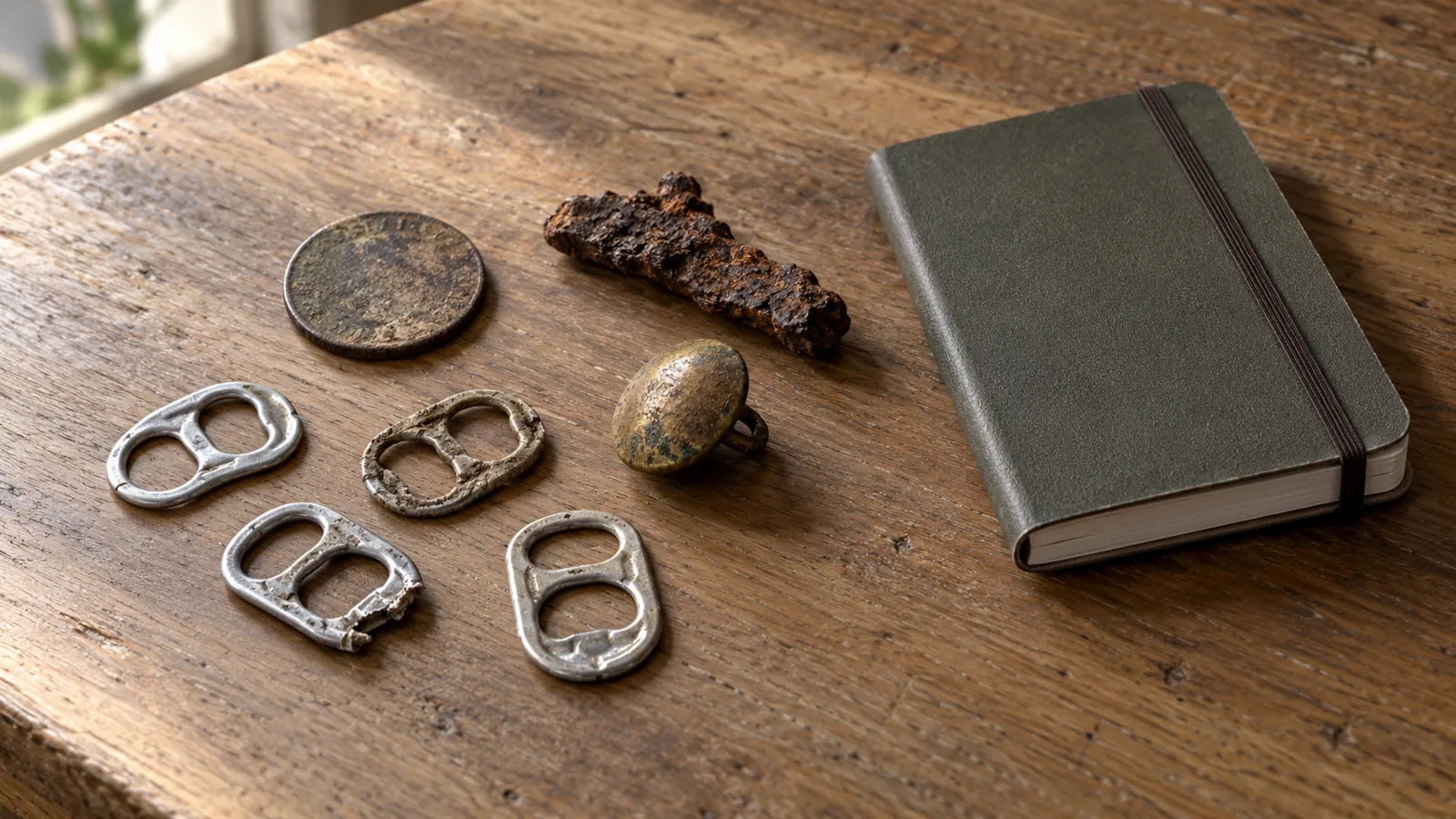
People often ask what can you find with a metal detector. The honest answer is that it depends on where you search, what has happened there over the years, and how much ordinary rubbish is under the coil. My early finds pouch contained a coin, two pull tabs, a bent nail, and something I was sure was a buckle until I cleaned it enough to discover it was a very ordinary washer.
That mix is part of the hobby. A detector responds to metal, not to importance. Learning to sort common metal detecting finds takes patience, and a quiet signal can be more interesting than a loud one. Here’s how I approach the things that turn up most often.
Coins are common, but context matters
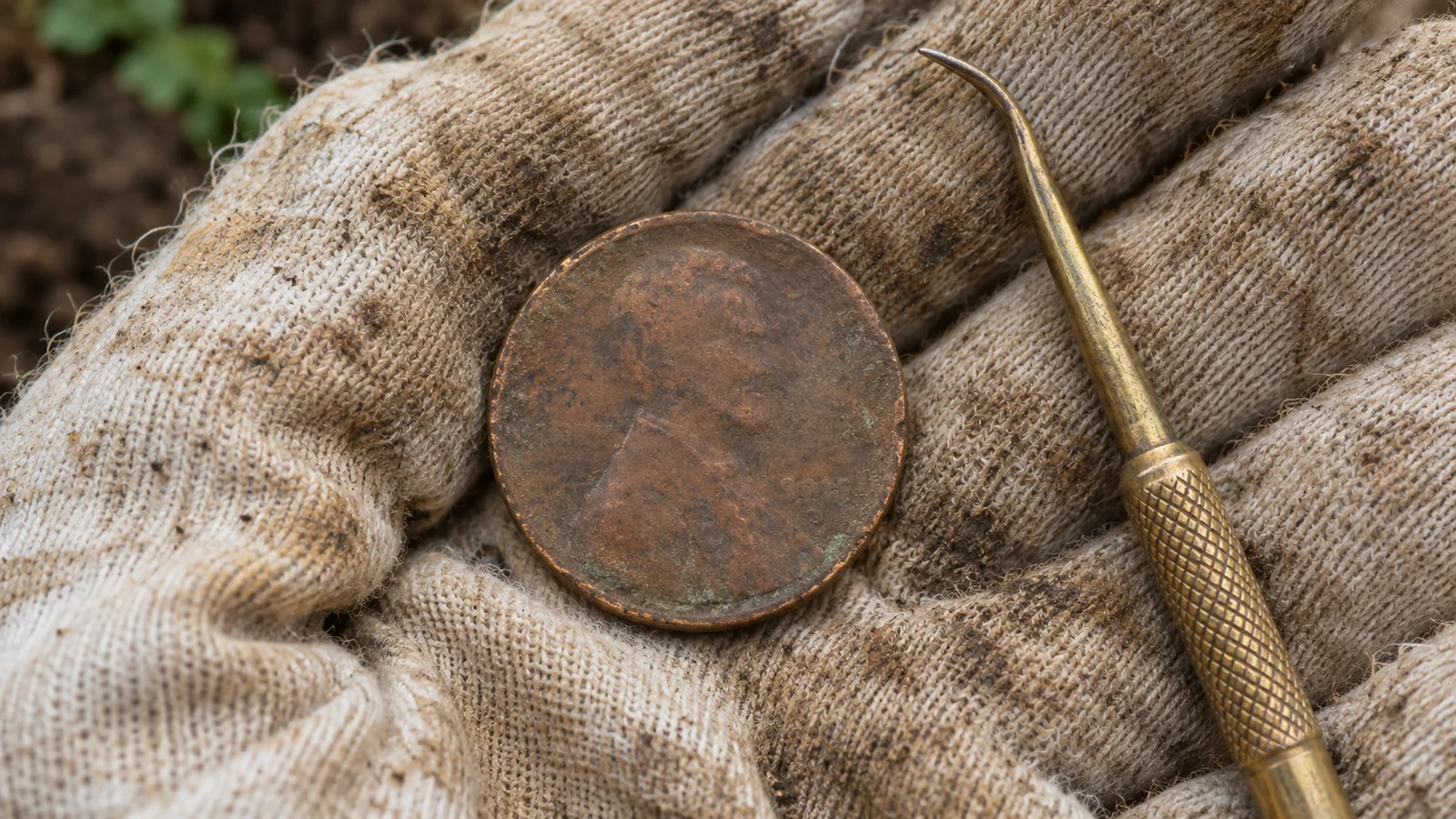
Coins are among the finds many detectorists hope for. In parks, beaches, and places where people gather, modern change may be more likely than an old coin. On older paths or worked ground, the history can be different, but location alone does not prove a coin is rare or valuable.
When I find a coin, I note where it came from and avoid aggressive cleaning. If the date or design is readable, I photograph both sides before doing anything else. A coin that looks plain in the soil may have a mint mark, unusual detail, or condition worth checking. If it could be an archaeological find or falls under local reporting rules, I follow the relevant process before treating it as a casual keepsake.
For identifying metal detecting finds, the most useful details are often the shape, dimensions, material, visible marks, and find context. A coin-identification reference or a local club can help more than a hurried guess from one blurry photo.
Buttons, buckles, and small personal objects
Buttons, snaps, belt fittings, and jewelry can appear in places where people lived, worked, or passed through. Some are modern losses; others may have age or local significance. A small round object with a loop on the back might be a button, but broken fasteners and decorative fittings can look similar after corrosion has had its say.
Look for construction details: a shank or loop, a hole pattern, a maker’s mark, or repeated decoration. Take photos before cleaning, especially if there is a design or inscription. Avoid bending a fragile object to see how it is made. If you suspect it is old or historically significant, ask a knowledgeable local group or museum about safe next steps.
Iron, lead, and the less glamorous pile
Nails, wire, fragments of tools, and bits of farm or building hardware are common. They can be frustrating when every signal sounds promising, but they also tell you something about how a place was used. A cluster of nails might relate to a demolished structure or routine maintenance. It is a clue, not a complete story.
Lead objects deserve extra care. Don’t handle them more than necessary, and wash your hands after contact. Keep them away from children and food surfaces. Some items may be ammunition or other hazardous debris. If a find looks like ordnance, do not pick it up or move it; leave the area and contact the appropriate local authorities.
Modern rubbish belongs in the rubbish stream, not back in the hole. I carry a separate bag for sharp or dirty trash so it doesn’t end up beside my phone and snacks. That may sound obvious; I learned it after a rusty fragment punched a hole in my finds pouch. The pouch had been less than impressed.
Relics and objects that need a pause
Tools, fragments of machinery, military items, and household objects may reveal a lot about a site. They may also be protected or subject to reporting requirements. Before you search, check land access and local rules. If an item appears historic, belongs to a protected site, or could be dangerous, stop and seek guidance rather than pocketing it for a closer look.
Military finds need special caution. A corroded object can be difficult to identify, and some ammunition remains dangerous. Don’t scrape, clean, or transport anything that might be explosive. Move away and report it through the proper local channel.
A simple way to record what you find
For finds that are safe and legal to recover, make a short record while the location is fresh in your mind. Note the date, general area, depth if your equipment provides a reasonable estimate, and a brief description. Keep the record private when sharing exact locations could encourage trespass or damage.
Photograph the object from more than one angle next to a scale, but avoid placing anything on the find if it is fragile. Keep soil and loose pieces together in a small bag until you can assess them. Don’t assume that every mark is a maker’s stamp or that every green patch means a particular metal; corrosion has a talent for making ordinary things look mysterious.
Some detectorists use target ID or VDI readings to decide whether to dig. Those readings can help narrow possibilities, but they do not identify an object with certainty. A ring pull and a coin can share a signal range, especially in mineralized ground or near other metal. I still dig carefully when the site and rules allow, then let the object tell me what it is.
Keep the useful, remove the rubbish
Decide what to keep based on safety, legal requirements, historical value, and your own collecting interests. Clearly modern rubbish can be disposed of responsibly. Recyclable scrap can be sorted where facilities accept it. Significant objects may need reporting or expert attention. A good detecting trip is not measured by how many things go into your display case.
When I want a quick, fictional version of the decision-making, MetalHunter offers detector signals, a collection, and a scrap yard. Out in a real field, the slower routine—check the rules, recover carefully, and record what matters—is the more useful habit.
FAQ
What can you find with a metal detector?
Common finds include modern coins, old coins, buttons, jewelry, nails, wire, and pieces of tools or machinery. The mix depends on the location and its history.
How do I start identifying metal detecting finds?
Photograph the object, note its size and find context, and look for visible marks or construction details. Compare it with reliable references or ask a local club; avoid aggressive cleaning first.
Should I keep every object I dig up?
No. Remove ordinary rubbish where safe and permitted, but handle potentially historic, hazardous, or legally reportable finds according to local guidance.
Are detector target ID readings reliable?
They are helpful clues, not guarantees. Soil conditions, depth, orientation, and nearby metal can make different objects produce similar readings.