Best Digging Tool for Metal Detecting: Hand Trowel vs Shovel
A regular garden trowel bends on your third tree root, while a heavy farm spade gets you banned from manicured turf. Choosing the right blade keeps both your back and landowners happy.
On my third metal detecting trip ever, I knelt down beside an old oak tree in an open meadow, wedged a cheap chrome garden trowel into the turf, and put my weight into the handle. There was a sickening snap, the plastic grip tore loose, and the stamped metal shaft bent into an unusable ninety-degree elbow. I was stranded two miles from my truck with four hours of daylight left and no way to dig. That broken trowel taught me that searching for the best digging tool for metal detecting is not about collecting flashy gear; it is about having reliable steel that cuts cleanly and stands up to punishing dirt.
Your shovel or hand blade is the hardest-working piece of equipment in your kit after your detector. It hits rocks, chops through thick tree roots, levers out heavy stones, and slices hundreds of turf plugs every season. Using the wrong tool wastes your energy and leaves unsightly scars on the land.
Hand Trowel vs Shovel: Picking the Right Blade for the Location
The debate over hand trowel vs shovel comes down to two simple factors: where you are hunting and how deep your targets are sitting. Neither tool is universally superior, and carrying both in your vehicle gives you flexibility across different permissions.
A rugged, serrated hand trowel is king in public spaces such as city parks, sports grounds, and manicured lawns. Walking across a public recreation ground carrying a forty-inch trenching spade will instantly draw nervous glances from council workers, dog walkers, and law enforcement. A hand digger, worn discreetly in a belt sheath, allows you to work low to the ground and cut surgical, invisible plugs that heal quickly without causing alarm.
A dedicated metal detecting shovel, on the other hand, is built for farm fields, deep pasture, ploughed acreage, and dense woodlands. Trying to dig twenty eight-inch holes in sun-baked pasture with a handheld trowel will ruin your wrists and wreck your lower back within two hours. A long spade gives you the mechanical leverage of your leg muscles and foot weight, opening clean flaps in tough clay with a single stomp.
Anatomy of a Dedicated Metal Detecting Shovel
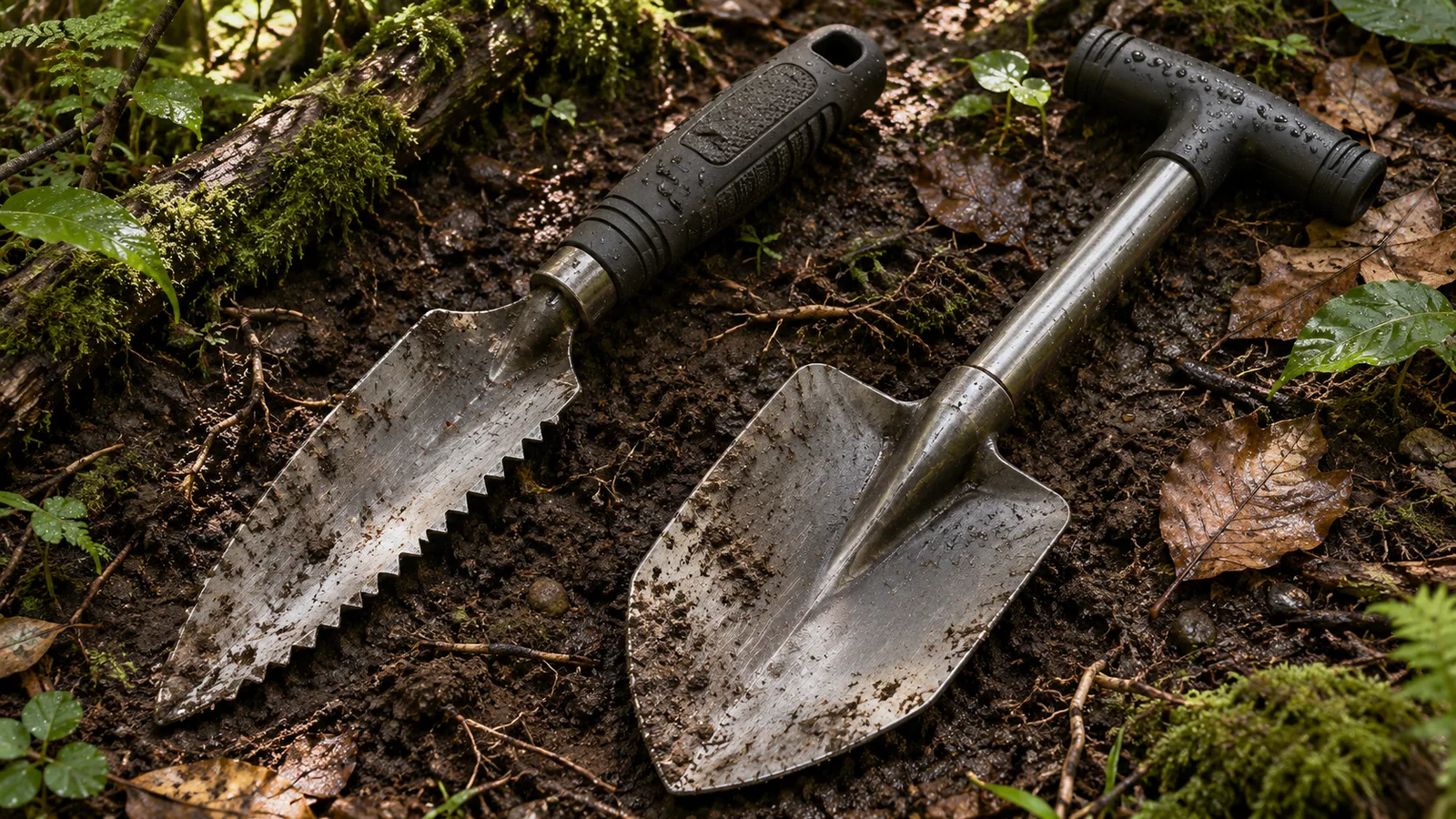
Standard garden spades from hardware shops are stamped out of thin sheet metal with flat, blunt edges designed for loose potting soil. A purpose-built metal detecting shovel features distinct design elements crafted specifically for recovering buried relics:
- Heat-treated steel: Blades built from aircraft-grade chromoly steel or heat-treated carbon steel will flex under heavy leverage without taking a permanent bend or snapping at the weld point.
- Serrated cutting edges: Sharp, saw-toothed serrations along both blade edges slice through fibrous grass roots and tough underground tree runners instead of tearing them apart.
- Teardrop or dagger blade geometry: A narrow, pointed blade penetrates dry or stony soil with far less resistance than a broad, flat square-nosed shovel.
- Reinforced foot pegs: Wide, folded steps on top of the blade allow you to drive the tool deep using your boot heel without slicing through the sole of your shoe.
- Handle geometry: T-handles provide compact packing and positive rotational control, while D-handles offer maximum gripping comfort when levering heavy plugs out of damp ground.
| Tool Type | Ideal Hunting Ground | Key Advantage | Main Limitation |
|---|---|---|---|
| Serrated Hand Digger | Public parks, school fields, lawns | Discreet, surgical cuts, easy belt carry | Limited leverage in hard-baked clay |
| Mid-Size T-Handle Spade | Pastures, ploughed fields, woods | Full foot leverage, cuts roots easily | Too conspicuous for manicured turf |
| Heavy Root Axe / Mattock | Rocky forests, dense timber tracks | Chops through thick woody obstacles | Very heavy to carry on long hikes |
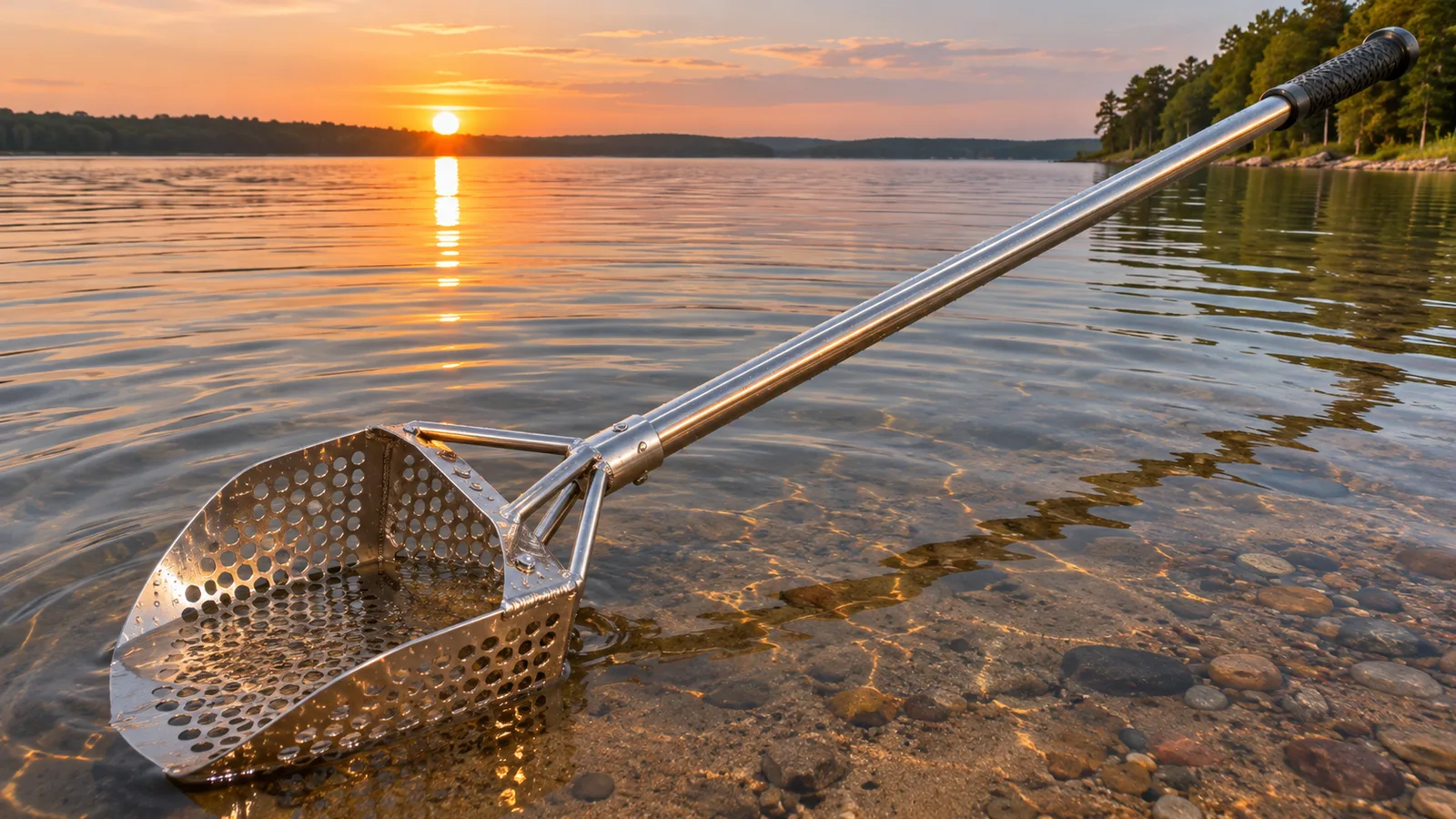
| Perforated Sand Scoop | Dry and wet beach sand, shallow surf | Instant water and sand sifting | Useless in clay or grassy soils |
The Art of Cutting the Perfect Horseshoe Plug
No matter which blade you choose, the way you dig defines your reputation as a detectorist. A sloppy hole left open or a ragged patch of brown, dead grass is the quickest way to get metal detecting banned from public parks and private farmland alike.
Always use the three-sided horseshoe cut. Push your blade down around the perimeter of the target in a gentle arc, leaving one side of the circle untouched. This uncut section acts as a living hinge. When you pry the plug back, the grass root system remains connected to the underlying subsoil and continues drawing moisture. Once you recover your target with your pinpointer, sweep any loose soil back into the pit, flip the grass hinge back into place, and press it firmly down with your boot heel. When done properly, the cut is virtually invisible, and the grass will not turn brown and die in the summer sun.
To keep the surrounding lawn clean, carry a small heavy-duty cloth or plastic towel. Pile any loose dirt onto the cloth rather than dumping it directly onto the surrounding green turf. When the hole is filled, shake the towel clean, and the lawn looks untouched.
Managing Gear Weight and Fatigue
A full-length steel spade weighs several pounds, and carrying it along with your detector, finds pouch, and water bottle will wear you down after four or five miles of walking. Whenever I plan an all-day trek across rolling hills, I look closely at my loadout and decide whether a lightweight mid-size spade or a heavy trenching blade is truly necessary.
In mobile simulators like MetalHunter, you can swap out shovels, backpacks, and detectors with a quick tap, testing different gear configurations across mountain trails, swamps, and desert sands without feeling the physical burn on your shoulders. Out in the real field, balancing durability against tool weight is a trade-off you feel in your muscles by late afternoon.
Tool Care, Sharpening, and Field Maintenance
A quality digging blade is an investment that should last decades with simple seasonal upkeep. After every hunt, scrape off wet clay and hose down the blade before throwing it in the car. Letting wet, mineralized mud sit on carbon steel will encourage surface pitting and rust.
Every few months, run a flat metal file along the serrated teeth and pointed tip. You do not want a razor-sharp edge that could cut your fingers while retrieving a target, but a clean, beveled profile cuts through turf roots with half the physical effort. Finally, consider wrapping a strip of high-visibility orange tape around the neck of your shovel shaft. Setting a dark olive-drab shovel down against autumn foliage while digging an exciting relic is an easy way to lose your favourite tool in the brush.
FAQ
Can I use an ordinary garden trowel for metal detecting?
Standard household garden trowels are generally made of light stamped metal with weak neck welds. They tend to bend or snap quickly when prying against tree roots, packed stones, or dry summer clay. Investing in a heat-treated, serrated hand digger designed for detecting is far more durable and safer.
What is the neatest way to dig in a manicured park?
The neatest method is cutting a clean three-sided horseshoe plug with a serrated hand trowel. Leaving one side uncut preserves the root hinge, keeping the grass alive. Using a small cloth to catch loose dirt keeps the surrounding lawn tidy before stomping the plug flat.
Why do metal detecting shovels have serrated edges?
Serrated teeth act like a saw against tough grass thatch and fibrous tree roots. Instead of bouncing off roots or tearing grass clods apart, the teeth cleanly slice through the underground vegetation, creating smooth plugs that heal quickly.
Is a T-handle or D-handle shovel better for detecting?
A T-handle shovel is more compact, easier to strap to a backpack, and provides excellent wrist control when twisting the blade through soil. A D-handle shovel offers a more comfortable, wide grip for heavy levering in deep farm fields, but adds extra bulk when carrying on long walks.