Find Lost Ring with Metal Detector: Grass and Snow Search Guide
When a neighbor loses a wedding ring in the backyard or a snowbank, panic sets in fast. A methodical grid search and the right detector adjustments make recovering that precious jewelry possible.
A few summers ago, my next-door neighbor knocked on my front door in sheer panic. He had spent the entire morning mowing the lawn and pulling weeds along the chain-link fence, and when he finally came inside to wash his hands, his gold wedding band was gone. He knew I spent my free weekends swinging a detector, and he asked if there was any chance we could locate it before the grass grew too tall. When someone asks how to find lost ring with metal detector gear, I always tell them it requires a completely different mindset than casual relic hunting. You are not searching for deep colonial artifacts buried under centuries of soil; you are tracking down a single, freshly dropped object resting right on the surface.
Interview the owner before turning on your machine
The biggest mistake you can make on a recovery call is rushing onto the grass and waving your coil randomly. Before you touch your gear, sit down with the owner and conduct a calm, detailed interview. People in distress often guess wildly about where they lost an item, sending you on a wild goose chase across five acres when the ring actually slipped off by the back patio.
Ask specific, probing questions. When was the last time they distinctly remember seeing or feeling the ring on their finger? What physical activities were they doing? Were they pulling off heavy leather work gloves, tossing a tennis ball for a dog, carrying trash bags to the curb, or shaking water off their hands after washing a car? Reconstructing the timeline allows you to establish a tight, prioritized search perimeter instead of exhausting yourself across an entire neighborhood block.
Searching for a lost ring in grass
When an item drops on a residential lawn, it does not magically vanish into the dirt. A lost ring in grass usually sits right on top of the thatch layer, supported by dense grass roots and organic matter. However, human eyes are terrible at spotting it because green blades quickly fold over the metal, masking it from above.
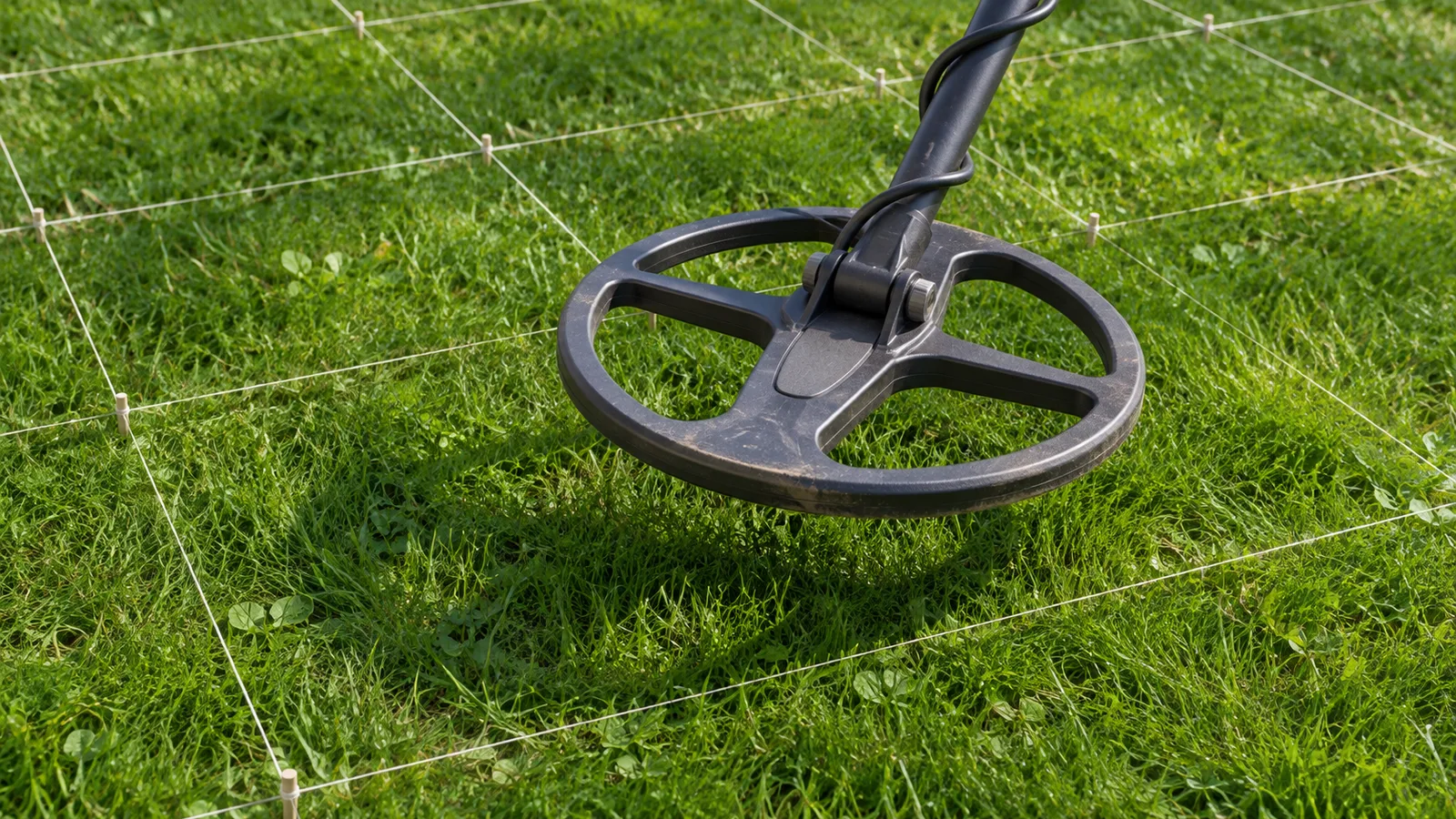
The first rule of lawn searching is to keep everyone from walking across the suspected area. If someone steps on the ring with a heavy work boot, they can easily press it deep into the soil or wedged under an exposed tree root. To search methodically, set up a visible search grid. You can lay down garden hoses, string lines, or fiberglass stakes spaced about three to four feet apart. Walk slowly along the grid line, keeping your search coil flat and level, overlapping each sweep by at least fifty percent. Once you finish the primary grid, turn ninety degrees and sweep the exact same area in a perpendicular direction. Rings can present odd angles to the electromagnetic field, and crossing your tracks ensures no blind spots remain.
The challenge of a lost ring in snow
Winter calls introduce entirely different physical conditions. A lost ring in snow behaves unpredictably depending on the texture of the precipitation. If the snow is dry and powdery, a heavy metal band will slice right through it like a hot knife, sinking all the way down to the frozen turf or driveway asphalt below. If the snow has melted and refrozen into an icy crust, the ring might bounce and slide ten or fifteen feet away from where the owner dropped their glove.
When searching winter drifts, tell the property owner to stay off the snow completely. Trampling the snow will pack the drift into solid ice, encasing the jewelry and making recovery ten times harder. Cold weather also dramatically cuts battery life on metal detectors, so carry fresh lithium batteries in your warm coat pocket. Sweep your coil just grazing the surface of the snow. If the snowdrift is knee-deep, you may need to skim the top layer with a plastic snow shovel, depositing the snow onto a clean plastic tarp where your pinpointer can scan it quickly without scratching the precious metal.
Detector settings for surface recovery work
Many detectorists instinctively turn sensitivity up to the maximum, believing that raw power will speed up the hunt. In a surface recovery scenario, high sensitivity is your worst enemy. Cranking the gain overloads the audio circuitry on shallow targets, creating broad, booming signals that make pinpointing difficult. Worse, high sensitivity reaches deep into the subsoil, alerting you to every buried nail, wire fragment, and rusty bottle cap from fifty years ago.
For surface ring searches, reduce your detector's sensitivity down to thirty or forty percent. This shallow field completely ignores deep historical trash while still screaming brightly on a ring lying within the top inch of grass or snow. Keep your audio discrimination wide open or notch out only small iron nails. Gold, white gold, and platinum rings produce mid-tone signals that easily fall into foil and pull tab zones, so discriminating out trash will blind your machine to the very jewelry you are trying to rescue.
Recovery strategy comparison: lawn turf versus winter snow
Here is how to adjust your approach based on the environment you are searching:
| Search Factor | Lawn Grass Recovery | Winter Snow Recovery |
|---|---|---|
| Coil Position | Flat against grass tips, slow sweep | Hovering 1 inch above powdery snow |
| Sensitivity Setting | Low (30% to 40% to ignore deep trash) | Moderate (enough to penetrate drift) |
| Visual Grid Markers | String lines or fiberglass yard stakes | Footprints on perimeter or spray chalk |
| Primary Recovery Tool | Handheld pinpointer and plastic probe | Pinpointer and wide plastic snow shovel |
| Major Threat to Item | Stepping on ring and burying it in mud | Packing drift into solid ice crust |
The ethics of volunteer recovery
Helping a neighbor recover a cherished heirloom brings a sense of community that money cannot buy. Many experienced hunters join volunteer groups like The Ring Finders, offering their skills to locate lost wedding bands, car keys, and sentimental jewelry. A good rule of thumb is never to demand a fee upfront. Most people will gladly offer a tip or cover your travel fuel, but the real reward is seeing the sheer disbelief and tears of gratitude when you place a lost family ring back in their hands.
Finding lost items in complex environments reminds me of playing MetalHunter, an Android first-person metal detecting game where you have to balance coil height and sweep speed across different terrain types like snowy fields and overgrown meadows. It captures that same satisfying thrill of methodically working a grid until the right signal finally breaks through the silence.
Always ensure you have clear landowner permission before beginning any recovery search on private property. If the search extends to municipal parks, check local city bylaws regarding metal detecting. In the rare event that your search turns up dangerous buried items like unexploded military ordnance or ammunition, do not handle them; mark the location and contact local police or emergency responders immediately.
FAQ
How fast does a lost ring sink into lawn grass?
A ring does not sink into soil immediately. It gets caught in the green blades and settles into the underlying thatch layer over several weeks. Rain, foot traffic, and lawnmower tires accelerate the process by pushing the ring down into soft soil.
Can a metal detector locate a ring under two feet of snow?
Yes, standard metal detectors easily detect rings through two feet of powdery snow because dry snow does not interfere with electromagnetic signals. However, you must keep the coil moving smoothly and avoid bumping hard frozen ice chunks.
Why should I lower my detector sensitivity when looking for a lost ring?
Lowering sensitivity prevents the detector from overloading on shallow targets and stops it from detecting deep rusty junk buried in the ground. It isolates the surface layer where the freshly lost ring is resting.
What should I do if the lost ring is near a chain-link fence?
Metal fences produce massive electromagnetic interference that overpowers detector coils. In this scenario, switch to a handheld pinpointer, shrink your coil size to a tiny sniper coil, or manually sweep with a pinpointer along the bottom fence rail.