Storing a Coin Collection Without Damaging It
A good coin holder is a small investment compared with the regret of finding fingerprints or scratches on a coin you meant to keep. Here are the storage habits I use, including a few mistakes I learned from the slow way.
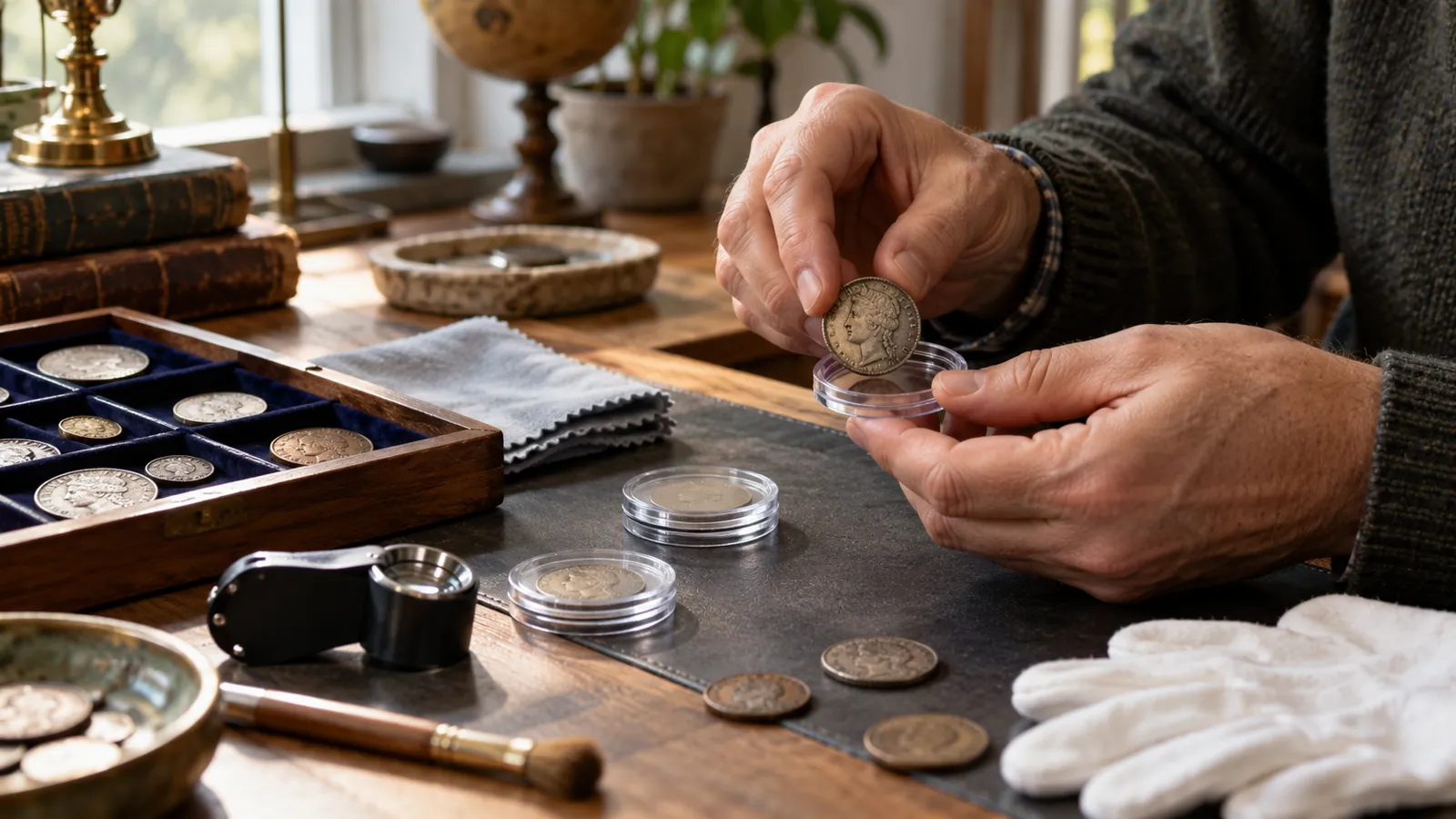
I used to think coin storage meant putting coins somewhere they would not get lost. A small tin seemed perfectly sensible until I found a few pieces rubbing against one another every time I moved it. Nothing was ruined beyond recognition, but the scratches were there, and I had supplied them myself. Since then, I have treated storage as part of collecting rather than an afterthought.
If you are wondering how to store a coin collection, start with the coin itself. Its metal, condition, value and how often you want to handle it all matter. You do not need a cabinet that looks like a bank vault. You do need clean, stable holders and a place away from damp, heat and curious hands.
Good storage starts with clean handling
Before choosing holders, get into the habit of handling coins by their edges. Skin oils and grit can leave marks, especially on delicate or uncirculated surfaces. I once picked up a bright coin by the face because I was in a hurry to show it to a friend. The faint print appeared more clearly later, which is a frustrating way to learn that “just a second” is plenty of time.
Use clean, dry hands for ordinary circulated coins, and hold them over a soft surface so a slip does not send one bouncing onto a hard floor. Some collectors use cotton gloves, but gloves can reduce grip and make a coin easier to drop. If you use them, choose gloves that fit well and keep them clean. For most casual handling, dry hands and an edge-only grip are practical.
Do not clean a coin before storing it just because it looks dull. Cleaning can remove the original surface, leave fine scratches or lower collector interest. If a coin is dirty, keep it separate and identify it before deciding what to do. A gentle rinse is not automatically harmless, and rubbing is usually the part that causes trouble.
Coin storage ideas for different collections
There are several sensible coin storage ideas, and none is right for every collection. Paper envelopes, cardboard flips, plastic flips, capsules, albums and trays all have uses. The important part is choosing materials made for coin storage and avoiding holders that can react with metal or trap moisture.
- Archival paper envelopes: Useful for inexpensive or temporarily stored coins. Write the identification on the envelope rather than on the coin, and make sure the paper is free of harmful chemicals.
- Cardboard flips: These hold a coin in a clear window and can be labelled. Choose acid-free, coin-safe versions and use a proper stapler or fold-over design that does not leave sharp metal near the coin.
- Plastic flips: Handy for viewing and sorting, but check that the material is intended for long-term coin storage. Avoid soft, flexible PVC plastic, which can leave a sticky green residue over time.
- Coin capsules: A snug, hard capsule helps protect a coin from handling and bumps. It needs to fit the coin properly; one that is too loose lets the coin rattle, while a tight fit can make removal awkward.
- Albums and trays: Albums make a collection easy to browse, while trays suit a shelf or cabinet. Check the inserts and pages for coin-safe materials and keep the whole album away from damp.
When people ask about the best holders for coin storage, I usually ask how often they plan to handle the coins. A coin you enjoy showing may suit a clear capsule or album. A low-value coin being sorted for later may be fine in a labelled paper envelope. The best holder is one that protects the coin and makes it less tempting to take it out by the face every five minutes.
Keep the storage area steady and dry
Coins are not fond of sudden changes in temperature or humidity. A dry cupboard inside the home is generally a better choice than a garage, attic, basement or shed, where conditions can swing. Keep the collection away from radiators, direct sun, plumbing and exterior walls that get cold or damp.
For a small collection, a sturdy box in a closet may be enough. If you use a safe or cabinet, consider whether moisture can build up inside. A desiccant packet can help in a closed space, but it needs checking or replacing according to its instructions. Do not let a packet touch coins directly, and do not assume it fixes a persistently damp room.
Store coins in a way that prevents them from shifting. Avoid jars, bowls and loose piles, even if they look charming on a shelf. Every bump and shuffle is another chance for contact marks. Keep the box on a stable shelf where it will not be crushed or knocked over during ordinary household activity.
Label carefully and keep a simple record
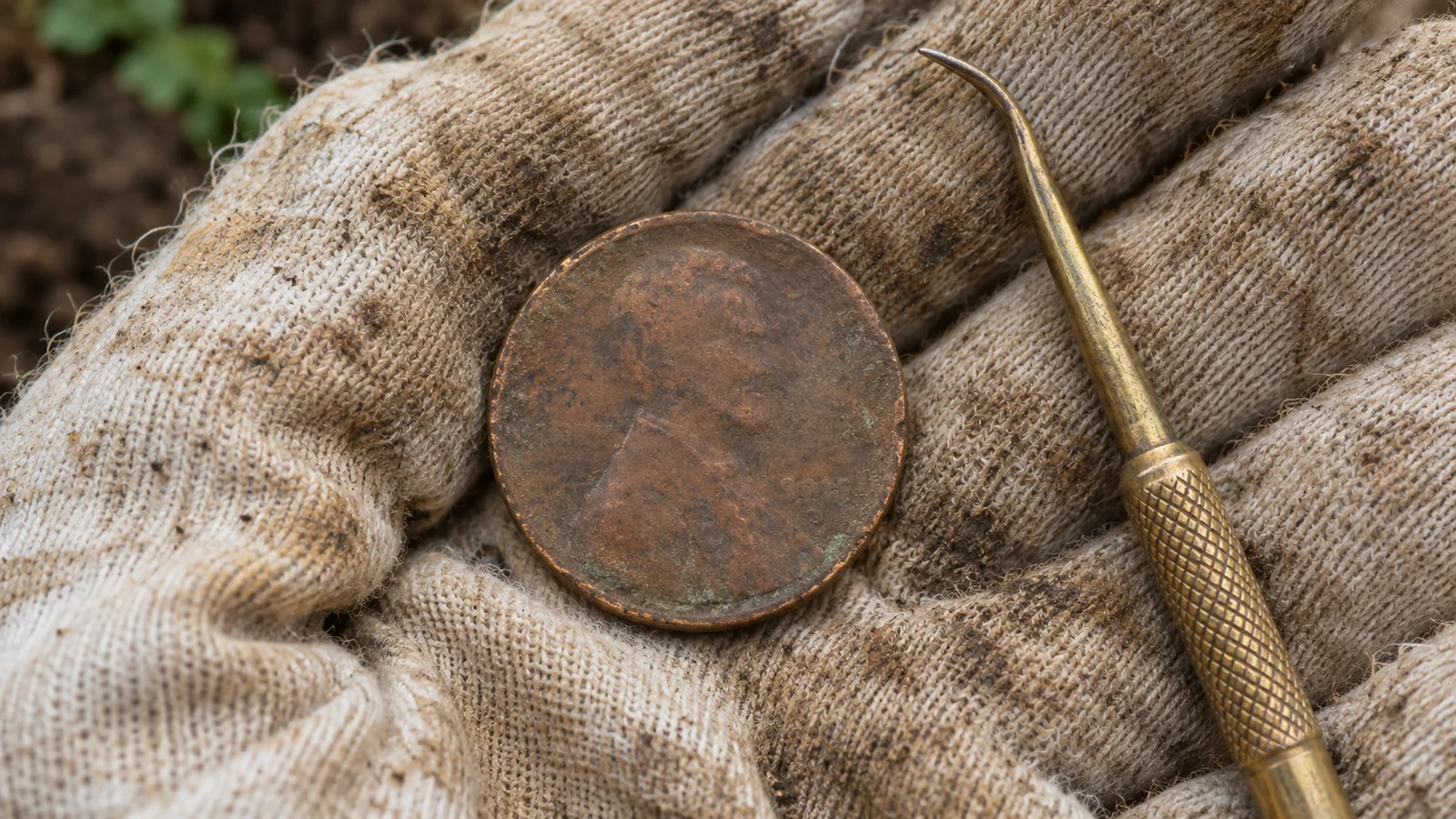
It is surprisingly easy to forget where a coin came from or why you set it aside. I keep a basic note with the date, denomination, country, any visible mint mark and where I found or acquired it. For a detected coin, I add the location in general terms, not a precise public post that could invite people to search the same spot without permission.
Put labels on holders or pages, never directly on the coin. Pencils, permanent markers and adhesive notes can all create problems if they contact a coin. If a label falls off, the holder should still keep the coin safe until you can identify it again.
Photographs are useful too. A clear image of both sides can make it easier to compare details later without handling the coin repeatedly. A simple phone photo is often enough for a personal record; use soft, even light and avoid pressing the coin against a hard surface.
A few habits that save avoidable damage
- Keep coins separate from keys, tools, jewellery and other loose objects.
- Do not store coins in paper clips, ordinary plastic bags or containers with unknown coatings.
- Check older albums and flips for sticky residue, corrosion or a chemical smell.
- Wash and dry your hands before sorting, and keep food and drinks off the table.
- Open a capsule only when you have a clear reason and a safe place to work.
If your collection includes a coin that may be valuable, avoid experimenting with cleaning or storage materials. A local coin club or reputable dealer can often point you toward suitable archival supplies. For coins found while detecting, I like recording the find before putting it away. That little routine helps me remember the story without repeatedly handling the object.
Coin collecting rewards patience, including the boring sort involving labelled envelopes and a sensible cupboard. If you enjoy the hunt as much as the collection, MetalHunter offers a casual way to search for virtual coins and other finds between real outings.
FAQ
Should I wear gloves when handling coins?
Clean, dry hands are fine for many circulated coins if you hold them by the edge. Gloves can help with delicate pieces, but a loose pair may make a coin easier to drop.
Are plastic coin holders safe for long-term storage?
Some are. Choose holders explicitly made from coin-safe materials and avoid soft PVC plastic, which can damage surfaces over time.
Can I keep coins in a bank envelope or ordinary paper envelope?
For short-term sorting, a clean envelope can work. For longer storage, use paper intended for archival or coin storage and keep the envelope in a dry, stable place.
Should I clean a coin before putting it away?
Usually, no. Cleaning can scratch or alter the surface. Identify the coin first, store it separately if it is dirty, and seek informed advice before attempting treatment.