Metal Detecting After Rain: How Wet Soil Boosts Detection Depth
When dark storm clouds pass, most hunters stay indoors, but wet ground often gives up the deepest coins. Here is how soaking moisture transforms target signals and helps you dig deeper.
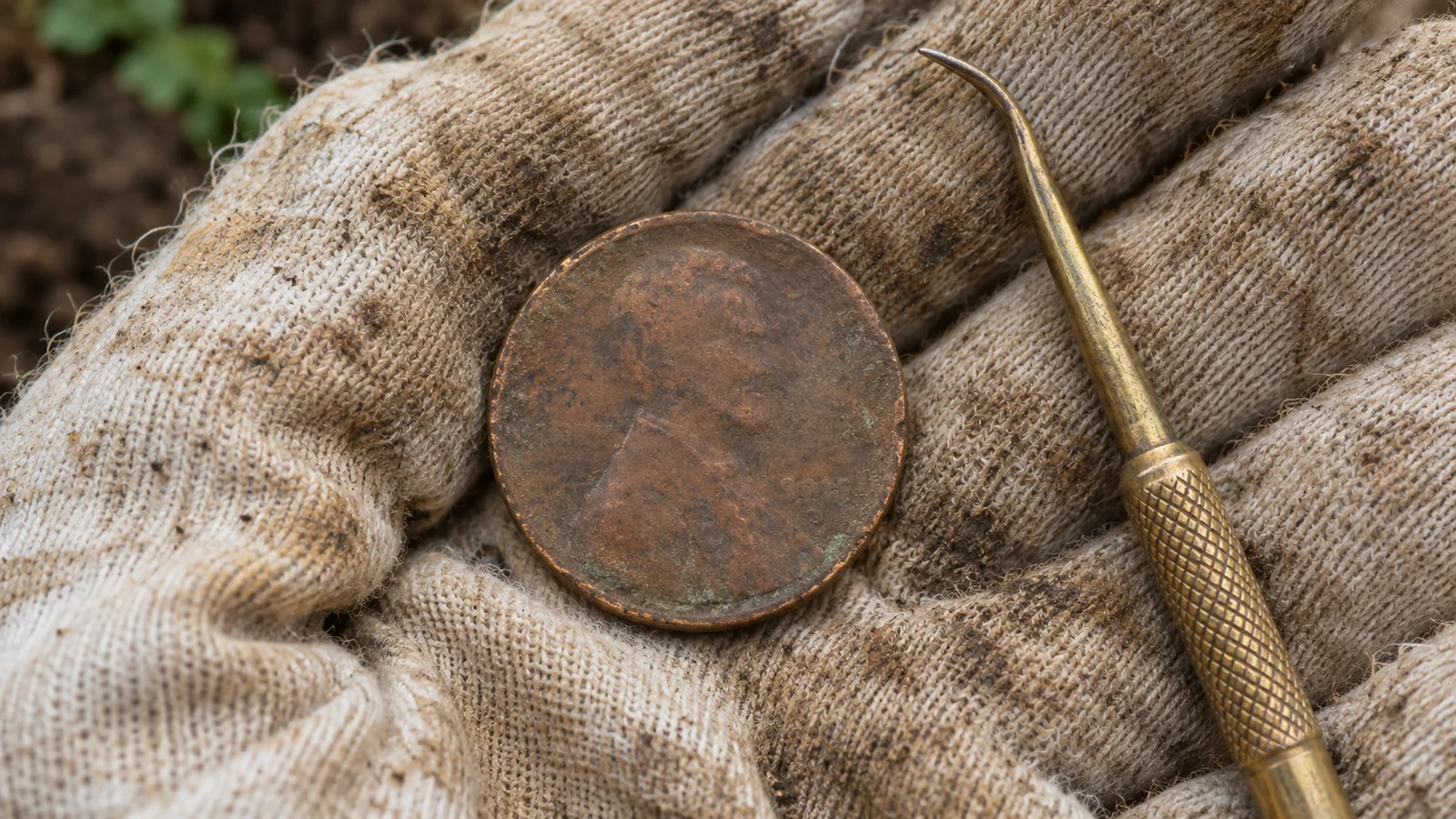
Whenever heavy gray storm clouds roll across my town and steady rain soaks the countryside for hours, my first impulse is to grab my boots and check my detector batteries. While most people pack up their gear and stay indoors when the weather turns wet, heading out for metal detecting after rain is one of the most effective ways to breathe new life into hunted-out sites. Soil moisture fundamentally alters the electrical environment beneath your search coil. I remember returning to an old nineteenth-century pasture that I had swept three times during a dry summer drought with almost nothing to show for it. Forty-eight hours after a steady autumn soaking, that same pasture came alive with deep, repeatable signals, including two worn copper cents that my detector had completely ignored just weeks earlier.
The science of wet soil depth and the halo effect
To understand why wet soil depth increases so noticeably, you have to look at how electrical resistance and metal corrosion interact underground. In bone-dry soil, dry dirt particles and tiny air pockets create substantial electrical resistance. When an electromagnetic pulse from your search coil travels through parched earth, it dissipates quickly, reducing the depth at which the detector can recognize a conductive disturbance.
At the same time, older metallic targets that have rested undisturbed in the earth for decades slowly leach metallic oxides and salts into the surrounding soil. This process creates a conductive chemical halo around the coin or relic. In dry ground, that halo dries out and shrinks in electrical conductivity, forcing your detector to pick up only the physical dimensions of the coin itself. When soaking rain saturates the earth, water acts as a natural electrolyte, revitalizing the conductive mineral halo. The effective electromagnetic footprint of the target expands, allowing your search coil to detect a strong phase shift at depths that would be completely silent during a dry spell.
When moisture helps and when it causes ground chatter
While moisture generally improves conductivity, wet ground does not behave identically across all soil types. In neutral loam, sandy dirt, or damp forest mulch, wet conditions almost always produce cleaner audio tones and an extra inch or two of solid detection depth. Deep silver coins that produced scratchy, one-way chirps in late August suddenly transform into clear, two-way repeatable high tones that give you the confidence to dig.
However, in heavily mineralized ground, such as red clay or dirt packed with hot rocks and decomposed iron, rainwater dissolves natural ground salts and excites magnetic mineral particles. This increases overall ground feedback, causing your machine to chatter or give false high-pitched squeaks whenever your coil brushes wet grass stems. When hunting mineralized dirt after rainfall, you must re-balance your detector over clean soil and drop your sensitivity setting down by ten or fifteen percent to stabilize performance.
Digging neat plugs in wet turf without making a mess
One major drawback to hunting after rain is the risk of turning a well-kept park or private lawn into a muddy disaster. Digging in wet grass requires extra care and proper technique:
- Use a clean drop cloth: Always place a small rubberized mat or heavy plastic cloth beside your target hole. Wet soil sticks to everything, and dumping muddy dirt straight onto wet grass leaves ugly brown stains that take weeks to wash away.
- Cut a horseshoe flap: Never cut a full circular plug when the soil is saturated with water. A circular plug in wet dirt tends to fall apart into muddy paste, severing the grass roots and killing the sod. Instead, cut a clean three-sided U-shaped flap, leaving the fourth side attached as a living hinge.
- Fold and replace carefully: Fold the flap backward onto the lawn, scoop loose wet dirt onto your cloth, retrieve the target, dump every speck of soil back into the cavity, and fold the flap back into position. Step firmly around the edges to compress the seams. When done properly, the repair is virtually invisible.
If torrential downpours turn your local fields into impassable mud swamps, you can still practice tone evaluation in MetalHunter, an Android first-person metal detecting game with locations ranging from plowed fields to mountain forests. It is an easy way to study how different soil types affect signal depth without getting your boots caked in wet clay.
Soil behavior comparison after heavy rainfall
Here is how typical soil environments respond to soaking rain and how you should adjust your machine:
| Soil Classification | Moisture Retention Level | Depth Gain Potential | Ground Mineral Chatter | Turf Plug Cleanliness |
|---|---|---|---|---|
| Sandy River Loam | Moderate drainage | Excellent (1 to 2 inches deeper) | Very low false signals | Clean, easy to replace |
| Forest Leaf Humus | High moisture retention | Noticeable audio boost on relics | Low ground feedback | Spongy, root-bound plugs |
| Red Mineralized Clay | Extremely high saturation | Variable (masked by mineral noise) | High chatter, requires ground balance | Sticky mud, requires drop cloth |
| Gravelly Farm Soil | Fast drainage | Moderate depth increase | Moderate iron halo activation | Prone to crumbling if disturbed |
Protecting your equipment from moisture and mud
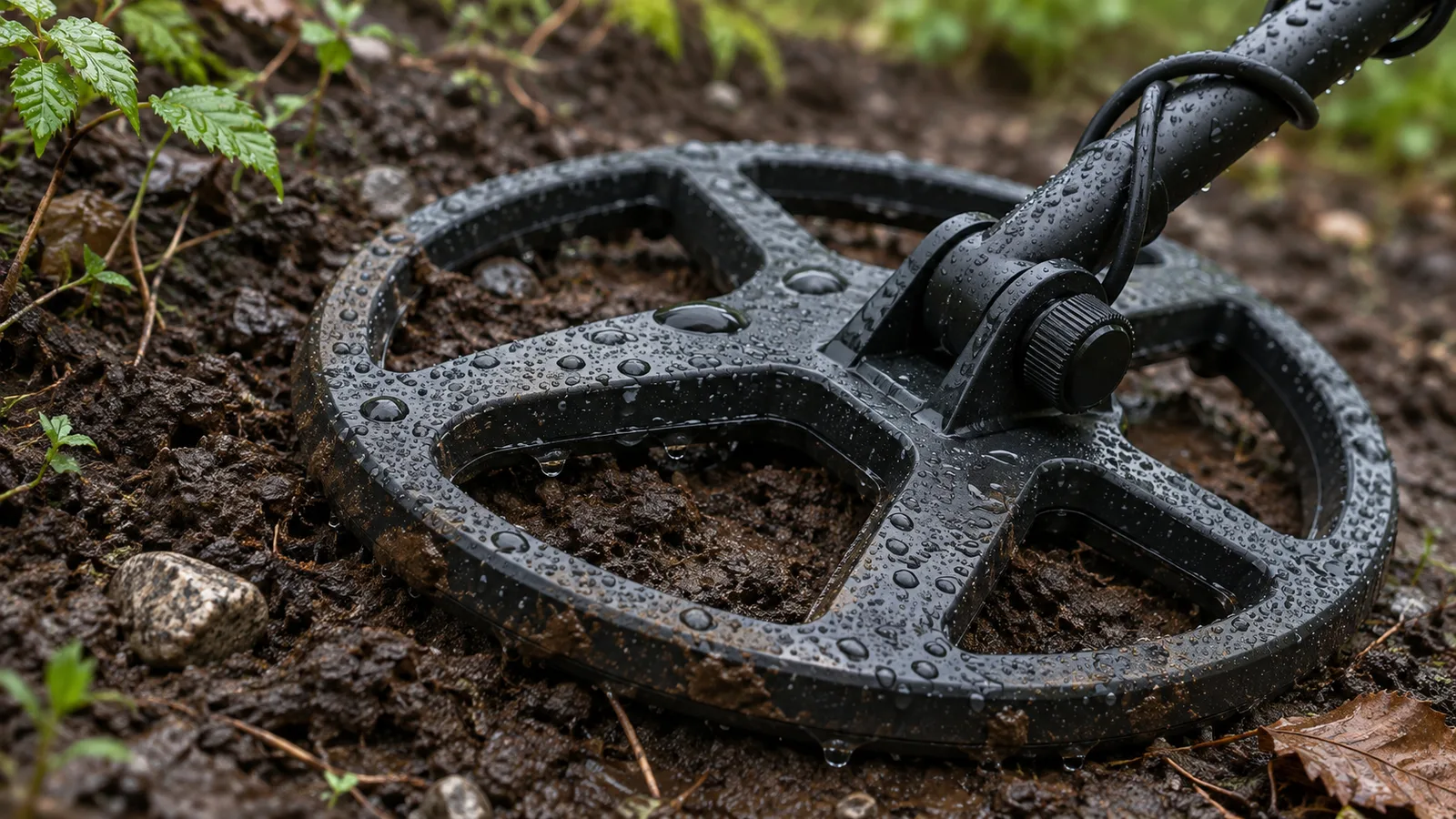
Even though your search coil is fully waterproof, you must take steps to protect the rest of your investment during wet weather hunts. Rainwater can seep into control housing seams, moisture can cause LCD display screens to fog up, and gritty mud can work its way into shaft cam locks, scratching the aluminum or carbon fiber stems.
Invest in a tight-fitting neoprene rain cover for your control box, or slip a clear waterproof plastic bag over the housing secured with a rubber band. When packing up your gear in the field, wipe down the lower and upper shafts with a dry towel before collapsing the stems. If you slide gritty wet sand into the cam locks, it acts like coarse grinding paste. Once home, open battery compartments to allow any trapped humidity to evaporate naturally in a warm room.
Remember that wet conditions make ethical detecting even more vital. Property owners hate seeing muddy footprints and torn turf. Always secure explicit permission before hunting private land, respect public park bylaws, and steer clear of protected archaeological monuments. In the UK, historic finds are regulated under the Treasure Act, while US public lands fall under ARPA rules. If you ever dig up suspicious military munitions or unexploded shells after heavy rain has exposed them, do not handle them; leave them in place and alert emergency authorities immediately.
FAQ
Does wet soil always increase metal detector depth?
In low to moderately mineralized soil, wet ground almost always increases detection depth by improving conductivity and revitalizing the target halo. In heavily mineralized soil, however, moisture can excite ground minerals and create interference that limits depth.
How can I stop my detector from making false signals in wet grass?
Lower your sensitivity setting slightly, ensure your coil cable is wrapped tightly around the shaft with no loose loops, and check that your coil cover does not have wet sand trapped inside it.
Can rainwater ruin a standard metal detector coil?
Search coils are factory sealed and completely submersible. However, if the coil housing has a hairline crack or if moisture seeps into the connector plug at the control box, it can cause severe falsing and internal damage.
Why do rusty iron nails sound like silver coins after rain?
Rainwater activates iron oxidation, causing large rusty objects to bleed conductive iron salts into surrounding soil. This temporary halo effect can fool detectors into generating high-pitch conductive tones on rusty iron.